
10 Years in the Making: Building a Safer Chicago Through Partnership, Investment and Community
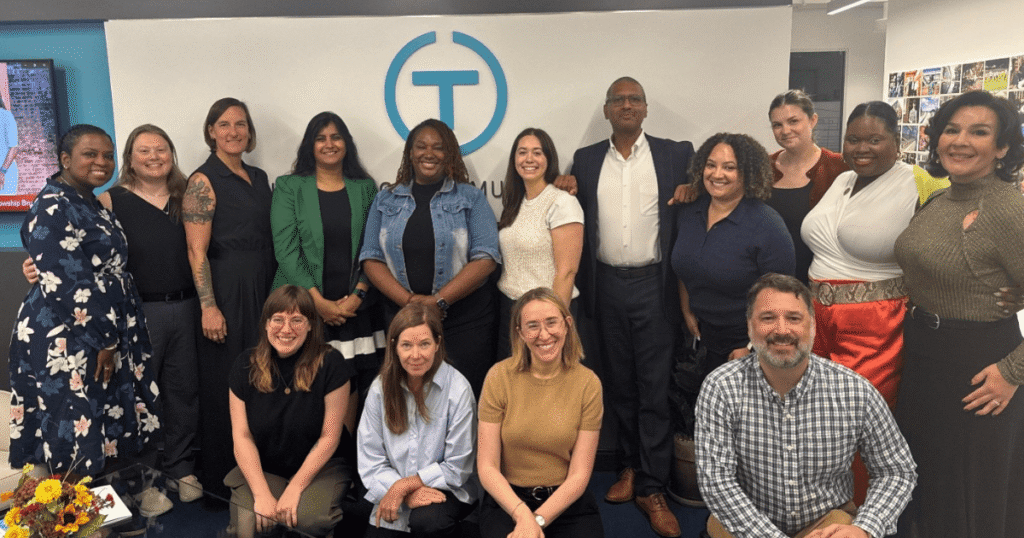
The Chicago Community Trust hosted an event exploring how philanthropic investments translate into community impact, bringing together staff and select external partners to discuss the Partnership for Safe and Peaceful Communities (PSPC), reflect on a decade of partnership, and explore how investments in community-based organizations are helping create safer neighborhoods across Chicago.
At the heart of the conversation was a shared belief that safety is a collective responsibility and that meaningful progress happens when communities, organizations, philanthropy, and public systems work together. Sustained investment in these partnerships has helped organizations strengthen their work, expand their reach, and develop solutions that respond to the unique needs of Chicago communities.
“We all want to be safe,” said Ayom Siengo, Senior Director of Critical Needs at The Chicago Community Trust. “We all strive for living [and] working in safe communities. And over the last ten years of this work, we’ve seen meaningful progress.”
That progress is rooted in relationships built over time. For organizations working directly in communities, philanthropic investments and partnerships have helped strengthen coordination, expand services, and create new approaches to community safety.
For Metropolitan Peace Initiatives‘ (MPI) Chief Program Officer Domonique McCord, that evolution has meant building deeper connections across systems while recognizing that violence prevention requires more than a single intervention. McCord emphasized that Community Violence Intervention (CVI) is about addressing the conditions that influence violence while supporting individuals with the tools and services they need to make better choices.
“I think historically people have thought of CVI organizations as just violence interruption. But, when you think about what’s needed to truly stop violence, you need to provide a holistic suite of services to be able to help the individual make informed choices in their lives,” said McCord.
“Sometimes people think it’s just stopping violence, but it’s employment, it’s education, it’s behavioral health supports, it’s workforce development.… You have to think about the environment in which you’re able to create change. And that is what CVI is. It’s evidence informed strategies that help us to create change in neighborhoods for the individual.”
That comprehensive approach has also allowed CVI organizations to expand their reach.
McCord reflected on how far the work has come since the early days of Communities Partnering 4 Peace (CP4P).
“In 2017, we started in nine core communities for peace. We’re now in 29. And when we think about who we train across the Metropolitan Peace Academy, it’s 38 of the 77 [Chicago] communities. So you see our reach has gone from nine communities to 38.”
That growth reflects what sustained investment can make possible when resources are paired with community knowledge and strong partnerships. It has also allowed CVI organizations to strengthen their ability to respond to changing needs and reach more people across Chicago.
The work is increasingly informed by data, allowing organizations to respond to the needs of communities in real time. Dr. Jayeti Newbold, Director of Program Implementation at Chicago CRED, described the scope of that approach.
“It’s a data-driven response. So, we know from a data-driven perspective who should be where, what areas they should be covering,” Dr. Newbold said.
She explained that data and analytics help organizations adapt their presence and resources based on what is happening on the ground, including identifying underserved groups and determining where support is needed most.
“It’s almost a 24-hour operation across a spectrum of opportunities [with] ways to engage with local partners and community members to ensure voice, but then also, to ensure safety.”
That emphasis on community voice is central to building effective public safety strategies. Andrea Dantua, Staff Attorney at Criminal Legal Systems Impact for Equity, spoke about the role of the Grassroots Alliance for Police Accountability (GAPA) in creating connections between community members, violence interrupters, and public safety institutions.
“GAPA has helped create a space where people can voice their concerns, their experiences, and can help uplift those concerns to the people with policymaking power,” she said. Dantua also highlighted an important lesson from the past decade: the people closest to the challenges facing their communities are often best positioned to identify solutions.
“I think that is a lot of what is missed if you are only looking at the numbers themselves. And it’s exciting that the CVI organizations, as well as the Grassroots Alliance for Police Accountability… are lifting up some of those solutions, creating space for them, empowering people, and creating hyper-local solutions to public safety.”
Jennifer Keeling, Chief of Partnerships and Operations at Chicago CRED and PSPC Co-Chair, echoed the importance of relationships and community-led solutions. Looking across the initiatives developed over the past decade, she described a consistent theme — going into communities and listening to the people who know them best.
“[The] base of every initiative is building relationships with our community,” said Keeling, emphasizing that effective strategies cannot be one size fits all. What works in one Chicago neighborhood may look very different in another.
“What happens in Austin and the way you respond to violence in Austin is very different from how you will respond to violence in North Lawndale or in Little Village, and so on and so forth.”
For Keeling, that means strategies must be customized, community-led, and shaped by the practitioners who have spent years working directly in those neighborhoods.
“To have practitioners that have been a part of CP4P, that have had ten years… under their belt to tell us ‘This is what we see in our neighborhood. This is the story we want to tell, this is how we think we will drive impact.’ To have them lead the model, to have them create the implementation plan has shown us that it’s working because they can change it as they need to change it,” Keeling said.
The past decade demonstrates what is possible when Chicago invests in community-based solutions and trusts the people closest to the work to help shape it. Sustained philanthropic investment has helped build the relationships, infrastructure, and capacity needed to strengthen CVI across the city.
Moving that progress forward will require continued investment in Communities Partnering 4 Peace and other initiatives throughout Chicago that are working every day to prevent violence, strengthen neighborhoods, and create pathways to safety.
A safer Chicago starts with partnership, sustained investment, trusted relationships, data-informed strategies, and the leadership of people who know their communities best.
The goal is clear: a safer Chicago. And getting there starts by investing in the people and organizations already doing the work.