
Southwest Organizing Project Victim Advocate Doris Villaverde Breaks Cycles of Trauma for Herself and Her Community
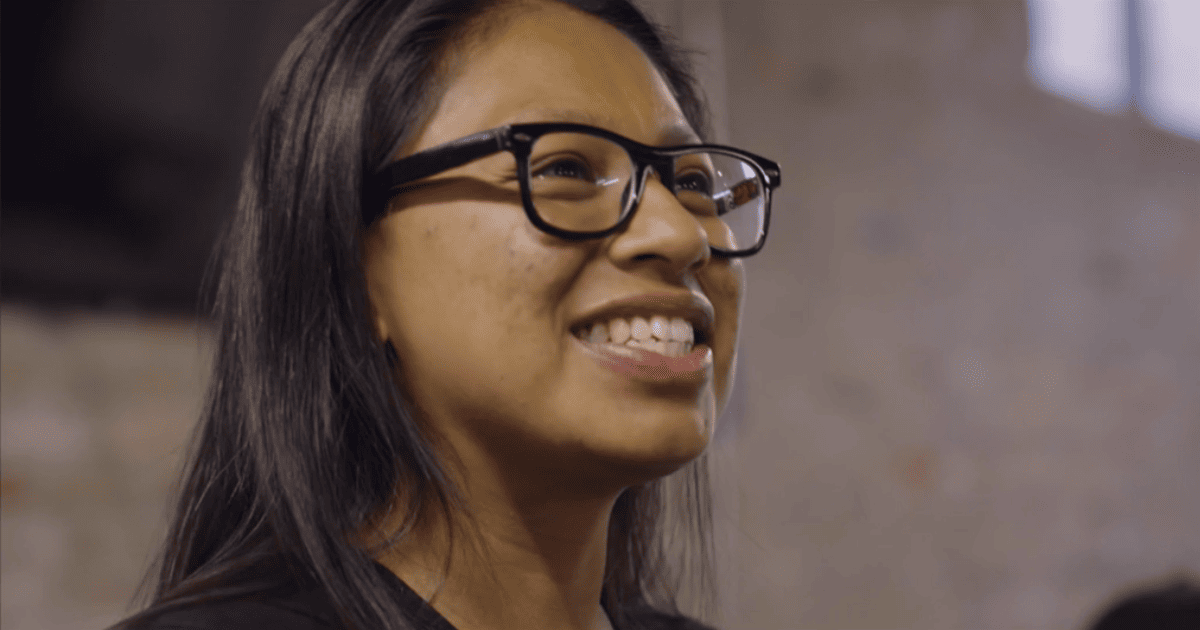
Victim advocates are some of the first in line to respond after a shooting. They receive notifications, try to find the victims or their families, and begin the process of providing support and services to those left in the wake of trauma. It’s an incredibly demanding job that requires quick thinking, relentless engagement, and a deep well of empathy.
Community Violence Intervention (CVI) is sustained by these direct service providers, like Doris Villaverde from the Southwest Organizing Project (SWOP).
“It really intrigued me,” said Villaverde, explaining how she was first introduced to CVI and SWOP through her sister. “I took it on without really knowing what to expect, and I gained so much knowledge in the first year of working here.”
Villaverde is a graduate of the Metropolitan Peace Academy (MPA); a member of Victim Services Cohort 2.
“For someone who didn’t know much about it, [the MPA] was very useful,” Villaverde says. “The biggest aspect of it was being able to meet other organizations and […] build that little community. So now, if there’s something I don’t know, I can reach out to them.”
At the MPA, an important part of the curriculum is turning traumatic experiences into strengths. This was true for Villaverde, too; she first experienced the fallout of violence in her childhood. She recalls domestic violence in her household and losing her brother to gun violence.
“What I have loved about this job is that when we talk about our history, it’s not looked at as a weakness. For the first time ever, it’s a strength,” Villaverde says. “Now I can talk about my experience without feeling shame, without feeling like I have to hide some part. I’m able to embrace what happened, which is not who I am anymore.”
She also applied the concepts of radical forgiveness and restorative justice to her own family, stating, “I was able to forgive my father a little bit more in the process, because it really is trauma after trauma from generation to generation. So, my biggest goal now is to break that cycle and not continue it with my own children.
“I think that’s why [SWOP] gave me a chance, even if I didn’t have [previous CVI] experience. I can be compassionate and empathetic with the victims because, in some way, shape, or form, my experience has some of that pain. It’s the same kind of outline, but different details,” she says.
Villaverde works with both fatal and nonfatal victims of community violence. Her strategy for reaching survivors of violence is compassionate and thoughtful, as she often goes above and beyond to support them through life-altering moments.
“I tend to look for the victims at the hospital. That in itself can be impactful. I just want them to know that, I really am here, I’m not just a number,” she says. “I show my face and give them my phone directly, and then after they’re discharged, I follow up with them and discuss immediate needs. Most of the time, it’s behavioral health, because it was a traumatic experience. Or other times, they’ve been hospitalized for weeks and don’t have a job anymore.”
For those who don’t survive, she makes sure to connect with their families to gauge their immediate needs.
“The biggest thing is making the funeral arrangements and helping them navigate that, because most of the time, they’re not prepared for such a financial expense,” Villaverde says.
“I meet everybody at their most vulnerable. Sometimes, with the nonfatal [victims], they’ve gone through so much, and some of them are now disabled from this life-changing event. And for the fatal [victims], you’re always introducing yourself under high-stress circumstances, sometimes it’s difficult navigating that, because you never know how they’re going to react. That’s the hardest part.”
But in her job, Villaverde has navigated challenges with grace. She says one challenge is changing assumptions about gender expectations. For example, Villaverde notes that domestic violence cases are more often assigned to women on staff, even though team members have all received the same training.
Still, she says her particular sensitivity to domestic violence means she can provide an extra layer of care to her work.
“I think my calling is [to serve victims of domestic violence], because I did experience it the most. Or something with children, because I have my own children. But being able to help the community—that’s why I’ll be staying in this line of work,” Villaverde says.
This sensitivity also led her to play a part in the creation of SWOP’s first program specifically for girls. It all started when the organization advertised a youth program, but it was male-dominated. When her niece needed support and was turned away because the program wasn’t co-ed, Villaverde pushed back and insisted on creating a program for girls.
Now, she can see the impacts of her advocacy every day.
“It’s very empowering to see these young women come into the office and have a presence we’ve never had before,” Villaverde says.
In reflecting on her journey, Villaverde says, “Growing up, I was on the other side of the spectrum. We were the ones needing resources. So the most rewarding part is to finally be on the flip side, where I can offer these resources.
“[Because of] the gratitude the families display, just for me being there to walk them through everything, step by step, on stuff they didn’t even know existed in their hardest times, I’m able to go home satisfied that I helped at least one person.”
Read more stories of women in Community Violence Intervention (CVI) here.