
MEET PEACE PORTRAITS HONOREE
RAFI PETERSON
Story: Sue Cardenas-Soto | Photography: Kelcey McKinney | Photo Editor: Isabel Miranda | Video: 5 by 12 Films | Creative Producer: Camille Travis
Peace Portraits, presented by the Illinois Peace Project, is a visual series dedicated to spotlighting the extraordinary individuals working every day to build safer, stronger, and more peaceful communities. These individuals embody the spirit of Peace Portraits, as they work tirelessly to inspire change and empower others.
Rafi Peterson is a foundational figure in the field of violence prevention.
He’s one of Chicago’s original violence interrupters — having spent over 25 years of his life on the front lines of Community Violence Intervention (CVI) at organizations such as CeaseFire and Cure Violence, and now, as Director of Communities Partnering 4 Peace (CP4P) at Southwest Organizing Project (SWOP). Peterson has seen every side of CVI because he’s also lived it.
“At one time, I was one of those brothers on the streets,” he said.
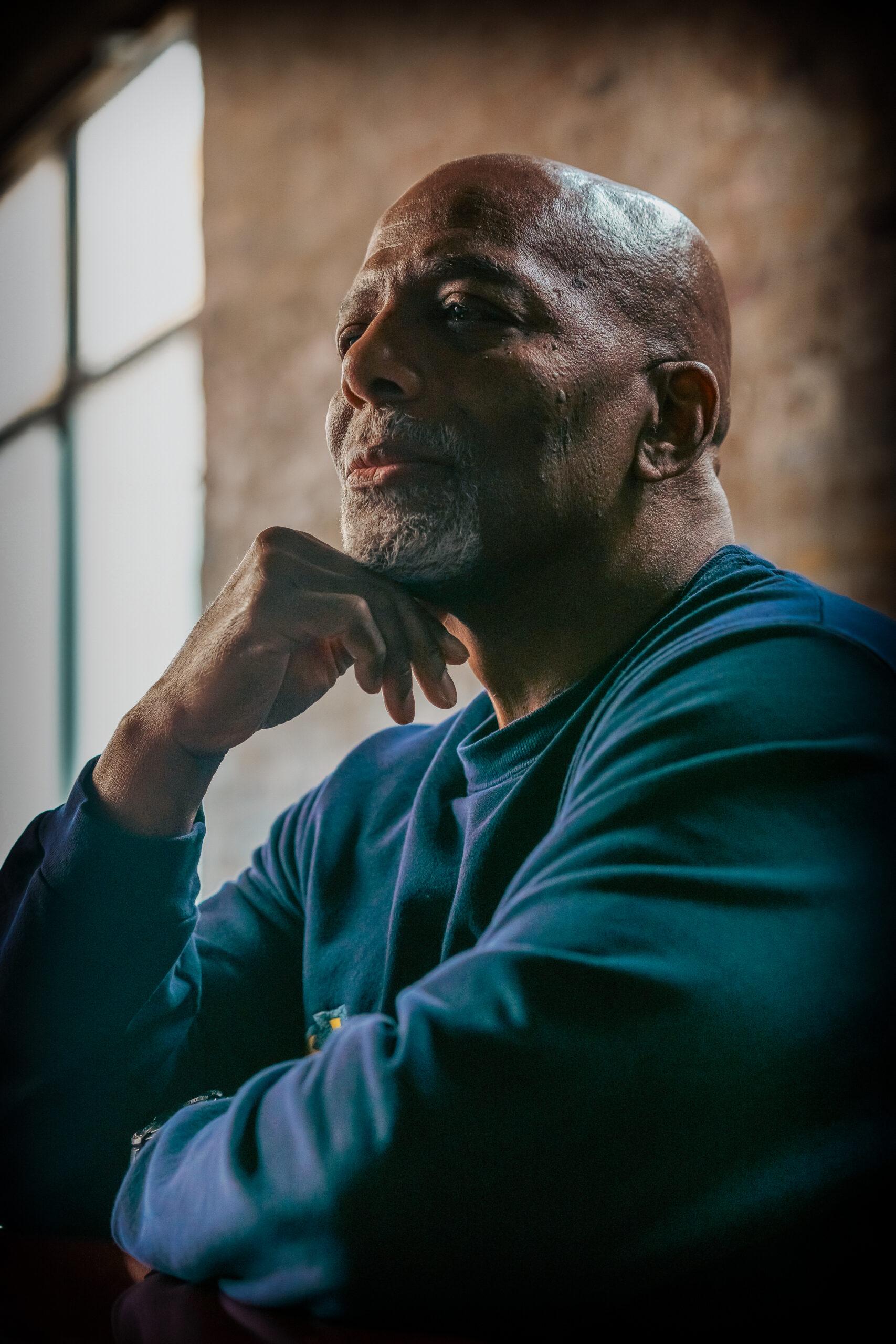
After serving six years in the military, Peterson was incarcerated in a maximum-security prison for over 12 years, a place he calls “the crypts.” But while inside, he says he metamorphosized, flying out like a butterfly from a cocoon.
“That’s how I felt leaving. I knew my life was going to change. I knew I had to dedicate my life to something else,” Peterson said.
Determined to end the cycles of violence, Peterson met organizer Rami Nashashibi and helped build the Inner City Muslim Action Network (IMAN) from the ground up. He also helped lead Project Restore, a re-entry initiative that used a combined strategy of transitional housing and door-to-door outreach.
Peterson speaks warmly about the early days of CVI, before it was a professionalized field, before it was even called CVI. From 1999 until the mid-2010s, Peterson was an integral part of hosting a massive peace-focused event called “Taking It to the Streets,” hosted biannually in Chicago Lawn’s Marquette Park. The event was inspired by Dr. Martin Luther King, Jr.’s visit to Marquette Park in 1966, and brought together thousands of people from different backgrounds.
“We had all of the organizations out there. I had [more than] 20,000 people in these parts, and we never had a gang shooting,” Peterson recalled.
The initiative was born out of an immense effort toward coalition building and celebrating differences.
Peterson shared a story about a time when the event overlapped with a cultural celebration in the neighborhood. Some of the organizers Peterson worked with were uneasy about navigating the differing traditions between the groups.
“[They said] ‘But we’re Muslim!’ [I replied], ‘Well, they’re not. This is their neighborhood, so they’re welcome to be out there. This park belongs to them, and they’re letting us use it today,’” Peterson said.
"We need to come together as human beings and deal with people [based] on who they are and what's in their heart."
That’s what makes Peterson an excellent violence interrupter. He understands that creating peace means building coalitions across differences, creating shared spaces, and demonstrating mutual respect and understanding.
"We need to come together as human beings and deal with people [based] on who they are and what's in their heart," he said.
The work is rewarding, but far from easy, especially after spending decades witnessing young people fall victim to the very same cycles of violence he fought to escape.
“It breaks my heart,” Peterson said. “It’s difficult to see these young brothers with so much potential […] gone just like that. Sometimes the uncertainty of what can happen and how quick circumstances can change bothers me.”
But, he remains fueled by his past experiences.
“I’m a survivor of cancer. I’ve been [shot]. I’ve been stabbed. I’ve had a very interesting life, but the one thing I’m sure of is that we have to do good deeds,” Peterson said. “I’ve been in a hellfire, in life, so I don’t want to end up there eternally. That’s why I do what I do and try to help these young brothers and sisters.”
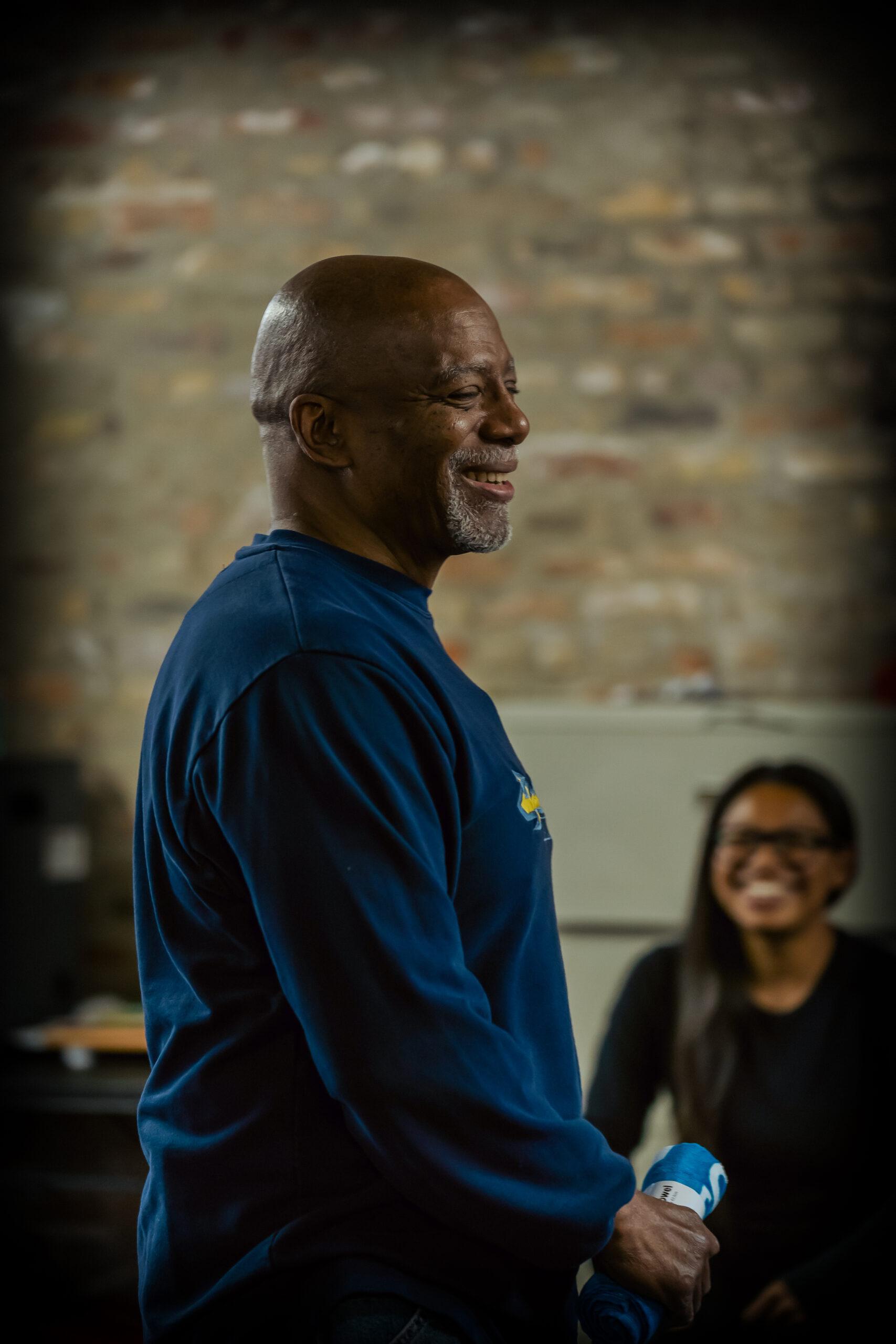
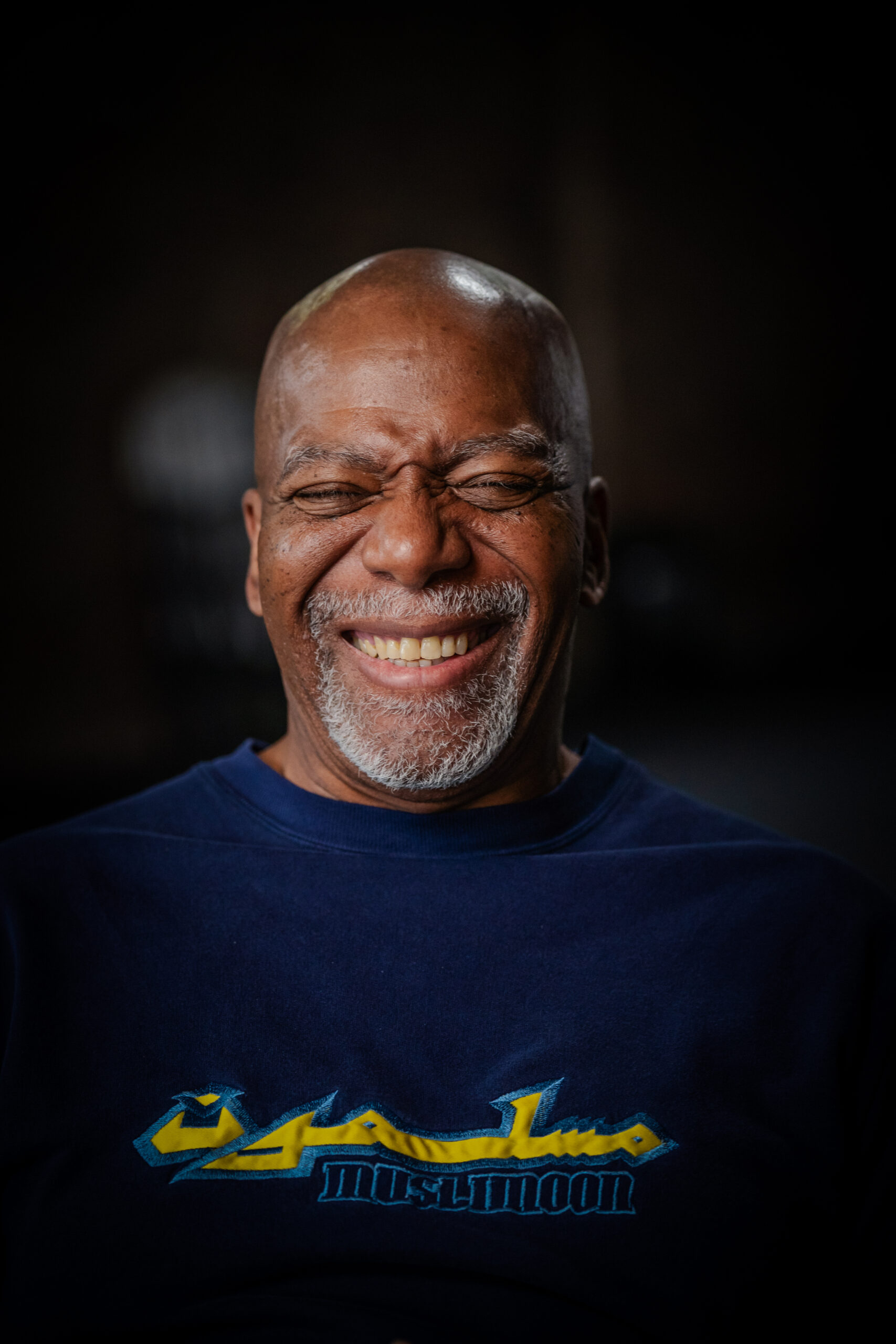
The young people he works with, he says, lack support in ways they don’t even understand. He sees a range of challenges—from domestic violence to systemic neglect—and is disheartened by the limited resources.
“The community is still hurt. So how do we figure that out?” Peterson said, noting that Chicago’s high-risk communities still face a tough road ahead.
And still, he maintains hope.
“The work itself is very rewarding to me. I’ve gotten to travel all over the globe doing this, and I love the work. […] And I still love the people. I’m tied to the community, so I want to see them be successful. That’s why I’m still doing what I’m doing.”
The Illinois Peace Project is an initiative supported by partner organizations with a shared vision for reducing gun violence in Illinois.
NEXT STORY: Meet Peace Portraits Honoree Jeannine Wise >>