
MEET PEACE PORTRAITS HONOREE NICOLE REED
Story: Sue Cardenas-Soto | Video: 5 by 12 Films | Photography: Kelcey McKinney | Creative Producer: Camille Travis
Peace Portraits, presented by the Illinois Peace Project, is a visual series dedicated to spotlighting the extraordinary individuals working every day to build safer, stronger, and more peaceful communities. These individuals embody the spirit of Peace Portraits, as they work tirelessly to inspire change and empower others.
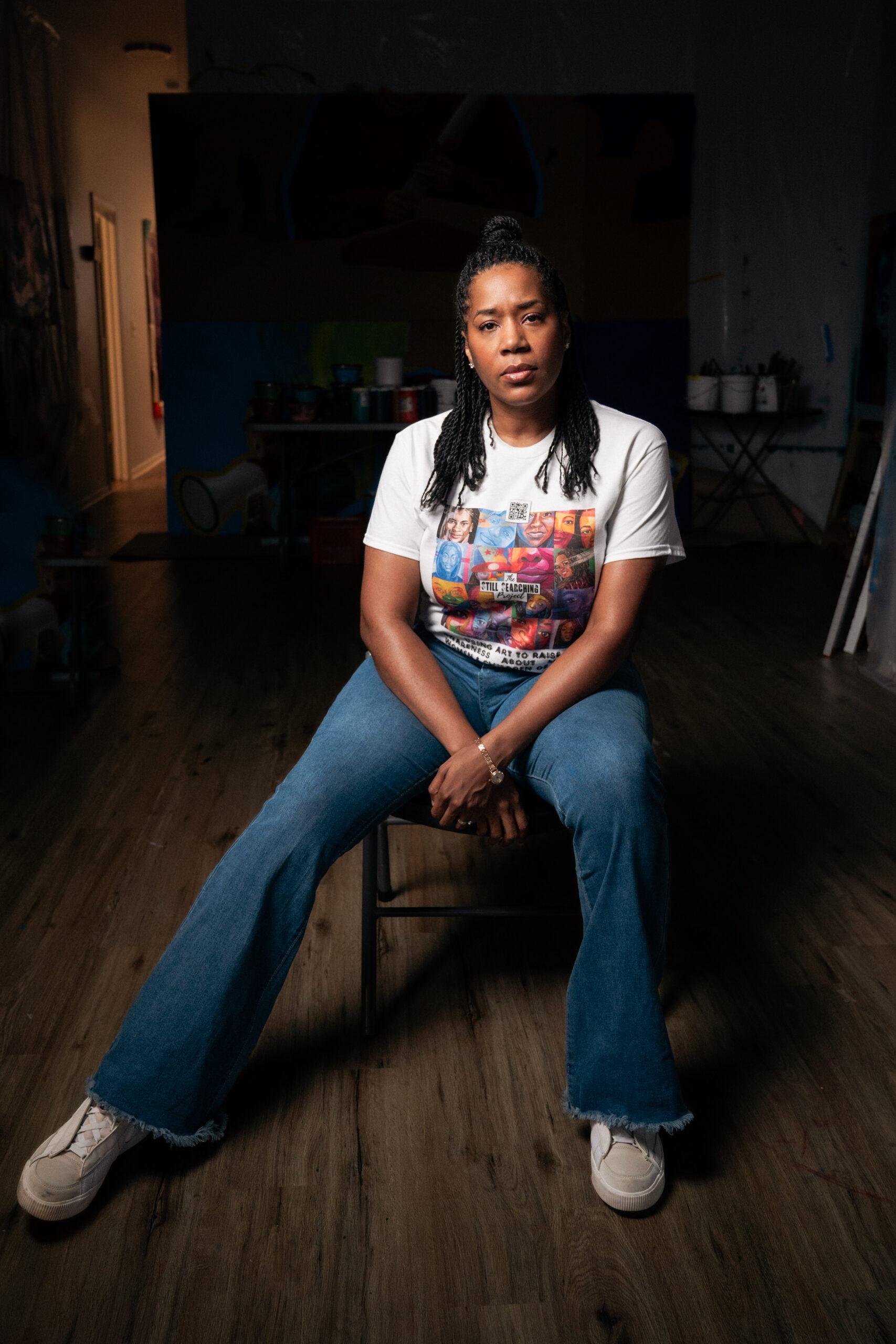
When Englewood native Nicole Reed isn't writing, acting, or developing short films and plays, she works to honor—and find— Chicago's Black women and girls.
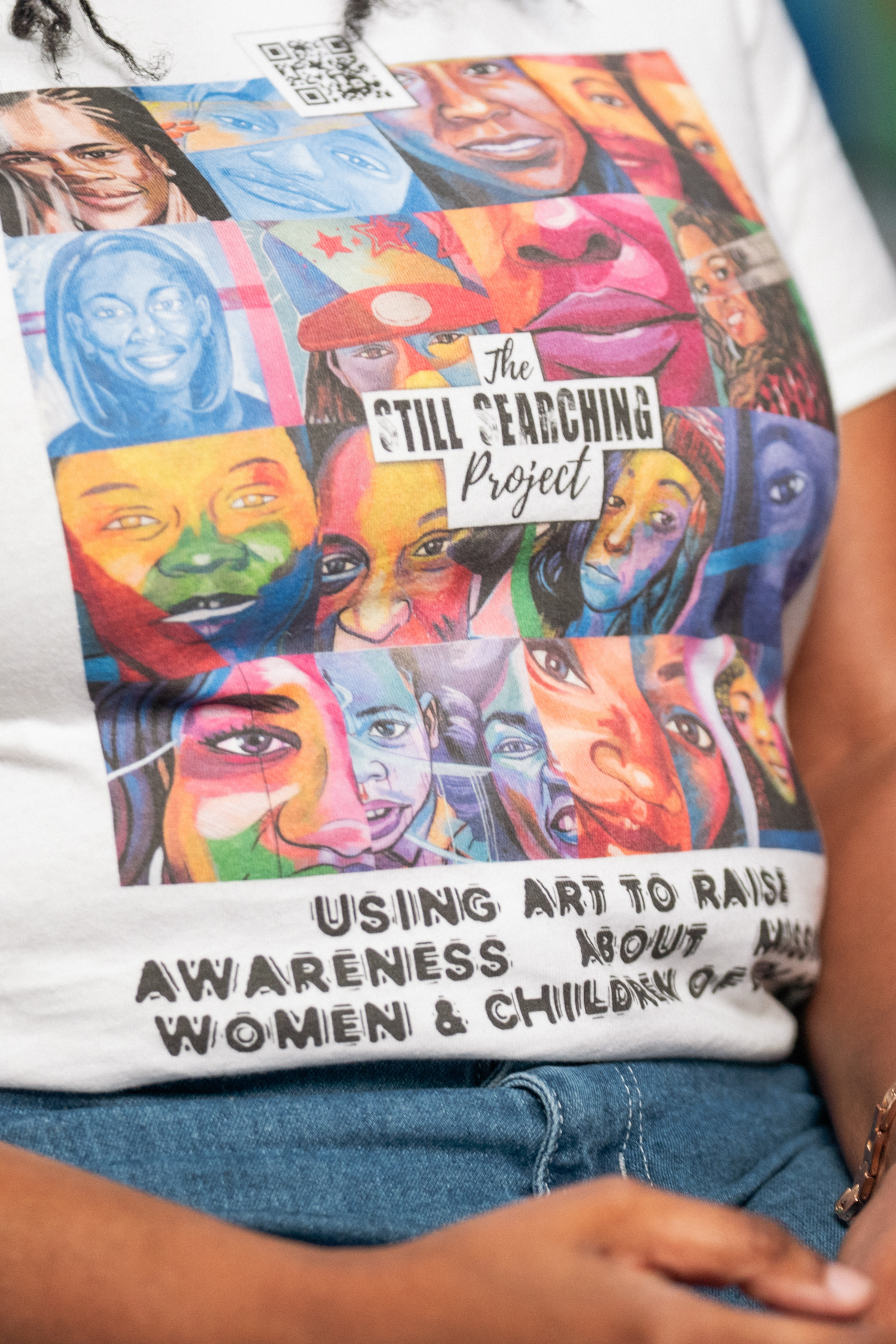
She serves as Executive Director of The Still Searching Project, a public art initiative that mounts vibrant murals in the memories of women and girls who have disappeared in the very places they were taken. It's a project that hits close to home.
The murals, painted by her husband, artist Damon Lamar Reed, are beautiful but solemn reminders of the silent epidemic of violence against women in Chicago. The project was initially inspired by the loss of Lamar Reed’s aunt and two cousins to a tragic murder in the early ’80s. Their attacker was never found, an all-too common element in femicides (targeted murders of women and girls) and disappearances.
It’s unknown exactly how many women and girls have disappeared throughout Chicago’s neighborhoods, but data shows Black women and girls are particularly vulnerable. According to the Invisible Institute and City Bureau’s 2024 “Missing in Chicago” report, about 31% of active missing persons cases in Chicago were Black women and girls, and Black girls (approximately aged 10 to 20) make up nearly one-third of all missing cases.
Those numbers are complicated by the realities around reporting these crimes; many of these disappearances are cold cases with no resolution. Reed explains that in urban areas with high levels of violence, a culture around “snitching” prevents community members from speaking out about disappearances.
Even if these disappearances are prevalent, the issue remains largely obscure. The Still Searching Project is an effort to make visible the women and girls who were made invisible.
“Our murals do three core things,” she explains. “They beautify the neighborhood—our murals give people safe places to look at beauty.”
Secondly, the murals are strategically placed in the areas where women and girls were taken, not only to serve as a reminder of their memory, but the sobering reality of the risks women and girls face in their own neighborhoods.
“[The mural] is a highlight, saying, ‘Hey, watch yourself when you’re around this area,’” Reed continues.
The third element the murals accomplish has a more practical purpose. “We put the information of the missing woman or the detective's information on the actual mural so that people can put anonymous tips in without being called a snitch or being told on,” she says.
Every mural they mount makes a powerful statement in the memory of the missing person it honors.
But for Reed personally, the experience of being around the murals is “double-sided.”
"For me, it gives me more passion and energy to make sure this doesn't happen to my daughters, and to somebody else's daughter."
“On one side, it’s beautiful art that my husband has made,” Reed shares. “On the other side, my heart goes out—and sometimes it's haunting—because you know the reason he's making this portrait is because someone's missing, something happened to them… For me, it gives me more passion and energy to make sure this doesn't happen to my daughters, and to somebody else's daughter.”
Reed says she and her husband consider the murals to be a legacy project that shows the power in being responsible for your fellow neighbor, something she says is slowly being lost in an increasingly individualistic society.
“We used to actually watch out for one another,” she says. “We knew everybody, we knew everybody’s business. It was more so just to make sure everybody was safe.”
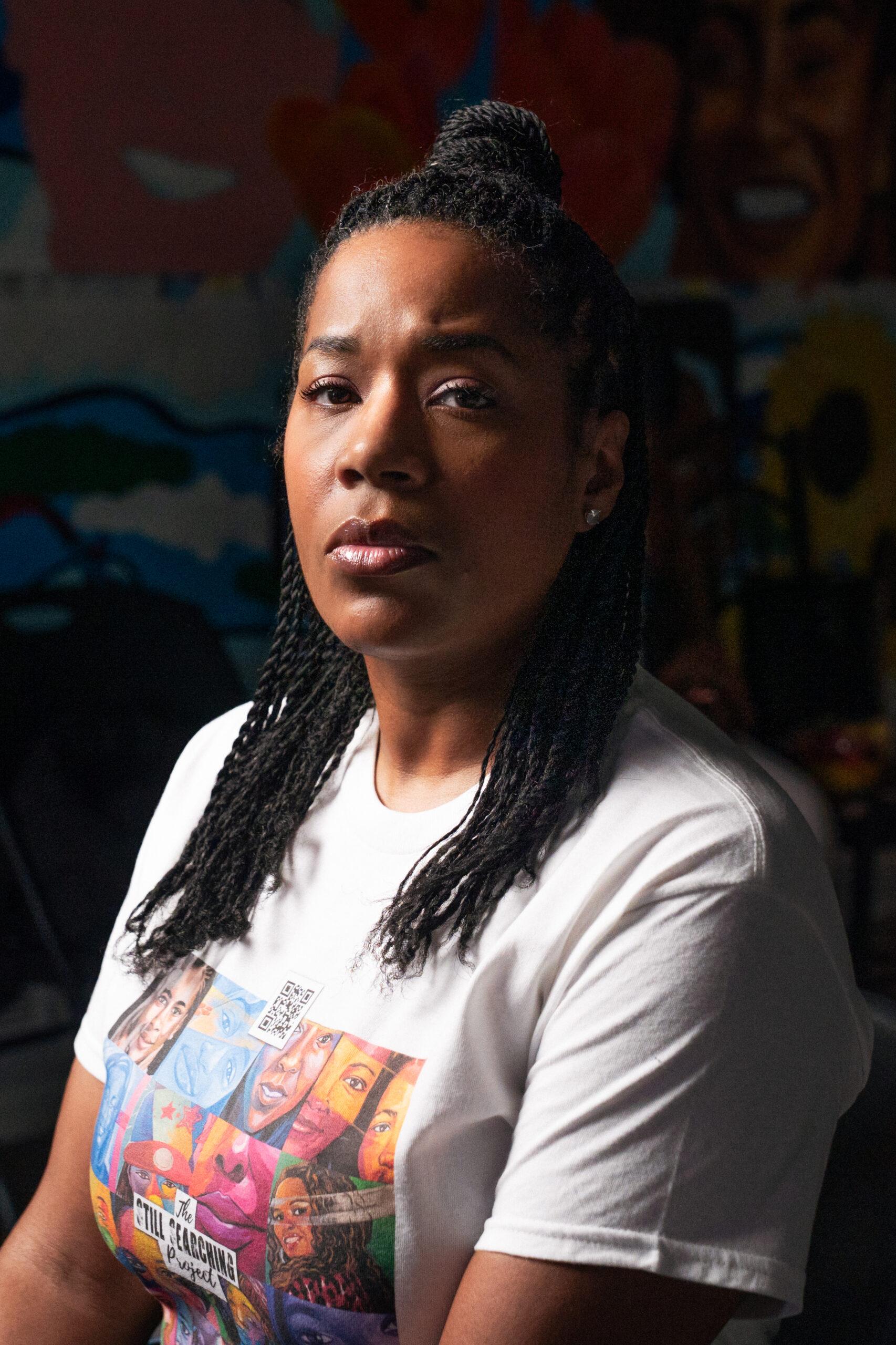
“I feel like The Still Searching Project kind of does that,” Reed continues. “For us, the people or the families that we work with, they're family now. It's not even a community thing… It's almost like, ‘Hey, you're not alone.’ We hear your cries. We hear the things that you're going through, and we are here. We’re strangers, but we can become family and fight this thing together.”
Reed says that as long as Black women and girls continue to go missing in Chicago, she has no intention of stopping her work.
“The numbers are rising in a horrendous fashion and people are turning a blind eye — sometimes because they feel it's not happening to them,” she explains, urging for more action that leads to resolution. “Let’s take the offense to this. Let's build defenses. And let's make sure it's not just one group doing it. Let's bring our resources together so that everybody can see they're a leader within their own right, and make this thing even bigger.
“The families have taught me resilience — to be able to go through one of the most traumatic and excruciating situations and still fight to have hope, fight to believe that your loved one can still be found, fight to even go throughout your day still trying to maintain your household, your other children, your job. To see that kind of tenacity — that's been priceless for me.
“I refuse to compromise on giving up.”
The Illinois Peace Project is an initiative supported by partner organizations with a shared vision for reducing gun violence in Illinois.
NEXT STORY: Meet Peace Portraits Honoree Luis Bahena >>