
MEET PEACE PORTRAITS HONOREE
JEANNINE WISE
Story: Sue Cardenas-Soto | Photography: Kelcey McKinney | Photo Editor: Isabel Miranda | Video: 5 by 12 Films | Producer: Camille Travis
Peace Portraits, presented by the Illinois Peace Project, is a visual series dedicated to spotlighting the incredible individuals making a difference to create or maintain peace in Illinois. Five honorees were selected after a review of more than 30 submissions and a rigorous judging process. These individuals embody the spirit of Peace Portraits, as they work tirelessly to strengthen their communities, empower residents, and inspire change.
What is "good food?" Is it your favorite comfort meal? Maybe a family recipe? Is it a kale salad or a protein shake?
Jeannine Wise, Program Director of Good Food is Good Medicine, says good food is complicated. It’s about food justice, she says. It’s deeper than nutrition.
“There’s structural racism woven in the food system, just as there’s structural racism woven into the entire fabric of our country,” Wise says. “Sadly, Chicago is a great example of this.”
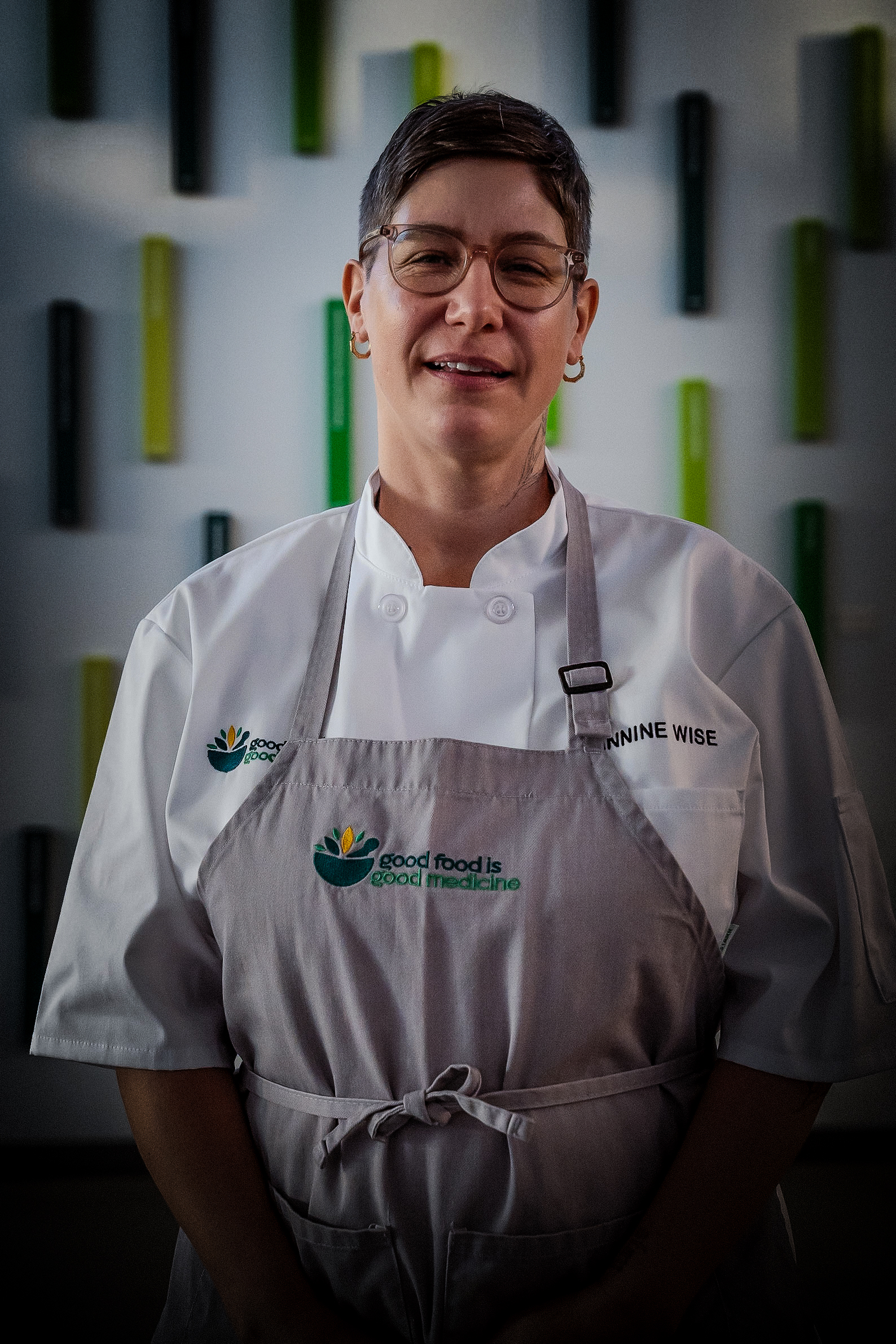
Wise says “good” and “bad” is complicated by issues of income, access, and education. She recognizes that access to basic needs—healthy food, clean water, affordable housing—can have a significant impact on an individual's safety and success. Food insecurity is a contributing factor to community violence and crime.
Part of Wise’s mission is to reduce those barriers for Chicago communities by healing their relationships with food—and themselves.
Wise came to Good Food is Good Medicine with a wealth of kitchen experience, from the famed Charlie Trotter’s restaurant to chef Rick Bayless’ community kitchens on the West Side of Chicago. While attending culinary school at Kendall College, Wise met Dr. Edwin K. McDonald, a gastroenterologist at the University of Chicago. Dr. McDonald brought Wise in to develop programs in the early days of Good Food is Good Medicine.
The program teaches foundational culinary techniques and nutrition lessons in communities on the South and West Sides. The curriculum is informed entirely by the participants who join. Baked into the programming are discussions about the school-to-prison pipeline, environmental racism, and food deserts.
"Everything we do is community-based. We don't do anything unless the community says they want it."
“Everything we do is community-based,” Wise explained. “We don’t do anything unless the community says they want it.”
This even comes down to the food they use; Wise makes sure every ingredient they cook is something already accessible to the participants. She goes as far as shopping their local stores and pantries herself. This level of care reflects Wise’s deeper philosophy, that your health isn’t just a result of the choices you make, but the circumstances you’re in.
“There’s a lot of people walking around thinking, ‘I have diabetes because it’s my fault. My doctor said I’m obese because I can’t get it together.’ When in reality, I think it was the American Medical Association that said there aren’t enough salads in the world to combat what is happening.”
She helps participants combat shame and creates a space for them, without prescribing. “I can never tell someone how to eat. I can only teach skills.” She explains, “[If] you tell me your favorite food is your grandma’s fried chicken, and I tell you that’s not good for you, you’ll never trust me. I just came at Grandma, and memories. So instead, let me show you how to roast veggies. And if you’re like, ‘I especially hate broccoli.’ I say, ‘That’s awesome. Let’s cook some veggies you like. And would you mind if I roasted some broccoli in the oven? Let’s see if you like it charred.’”
Those collaborative, authentic relationships are at the heart of Good Food is Good Medicine. “You might look at the program and think I’m the chef. But it’s not like that at all. I’m more like the pan, or the pot. […] The participants come in, they are all the ingredients, they are the techniques,” Wise said. “We taste, and adjust, and season our programming constantly, the same way you would a pot of collards or a soup.”
“Everything we do leads to non-violence, because we’re creating community, and it’s not imposed. [...] And while I'm not a doctor or medical professional, I do know how to create community in this room. What we can do is arm ourselves with knowledge.”
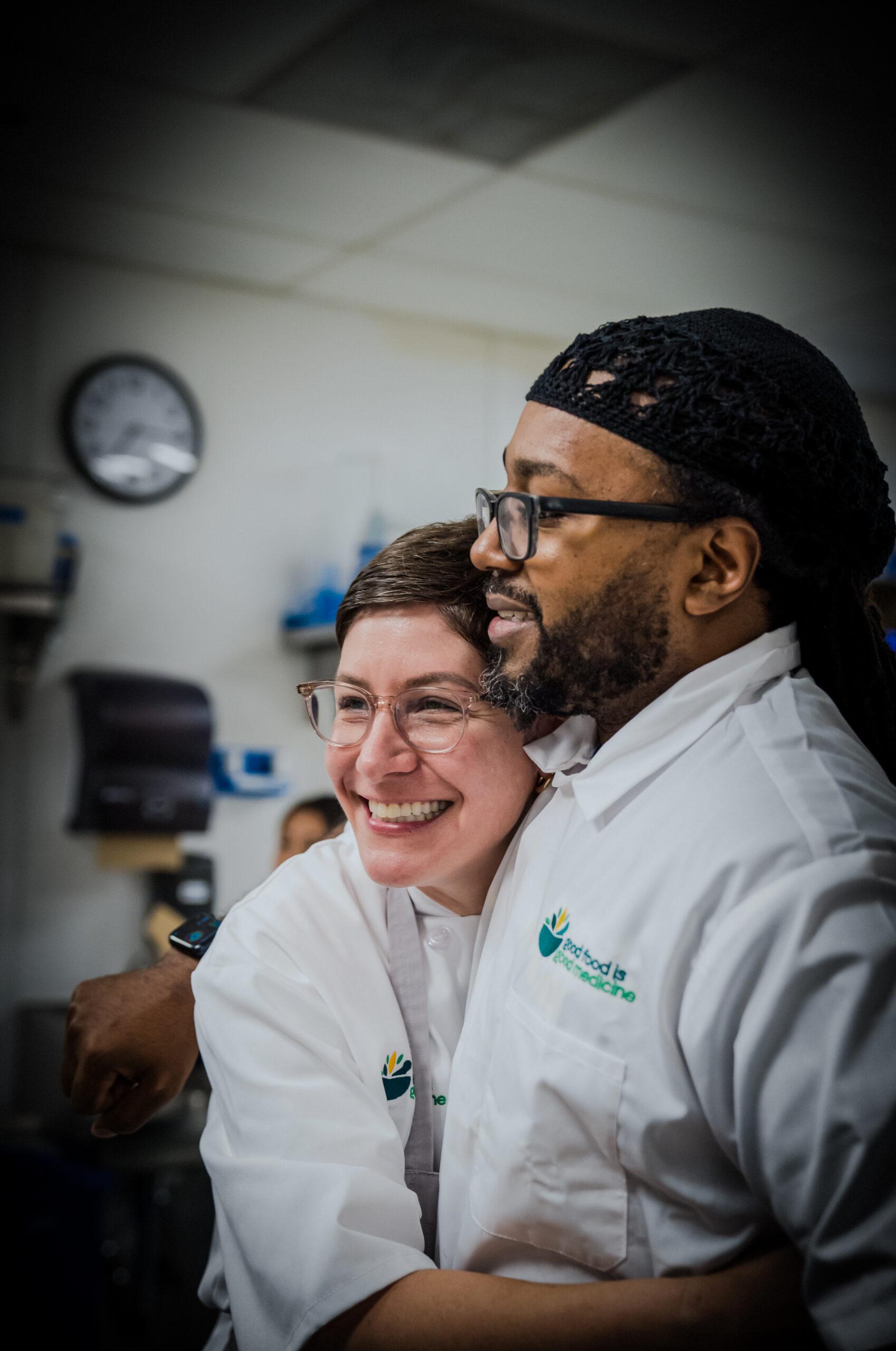
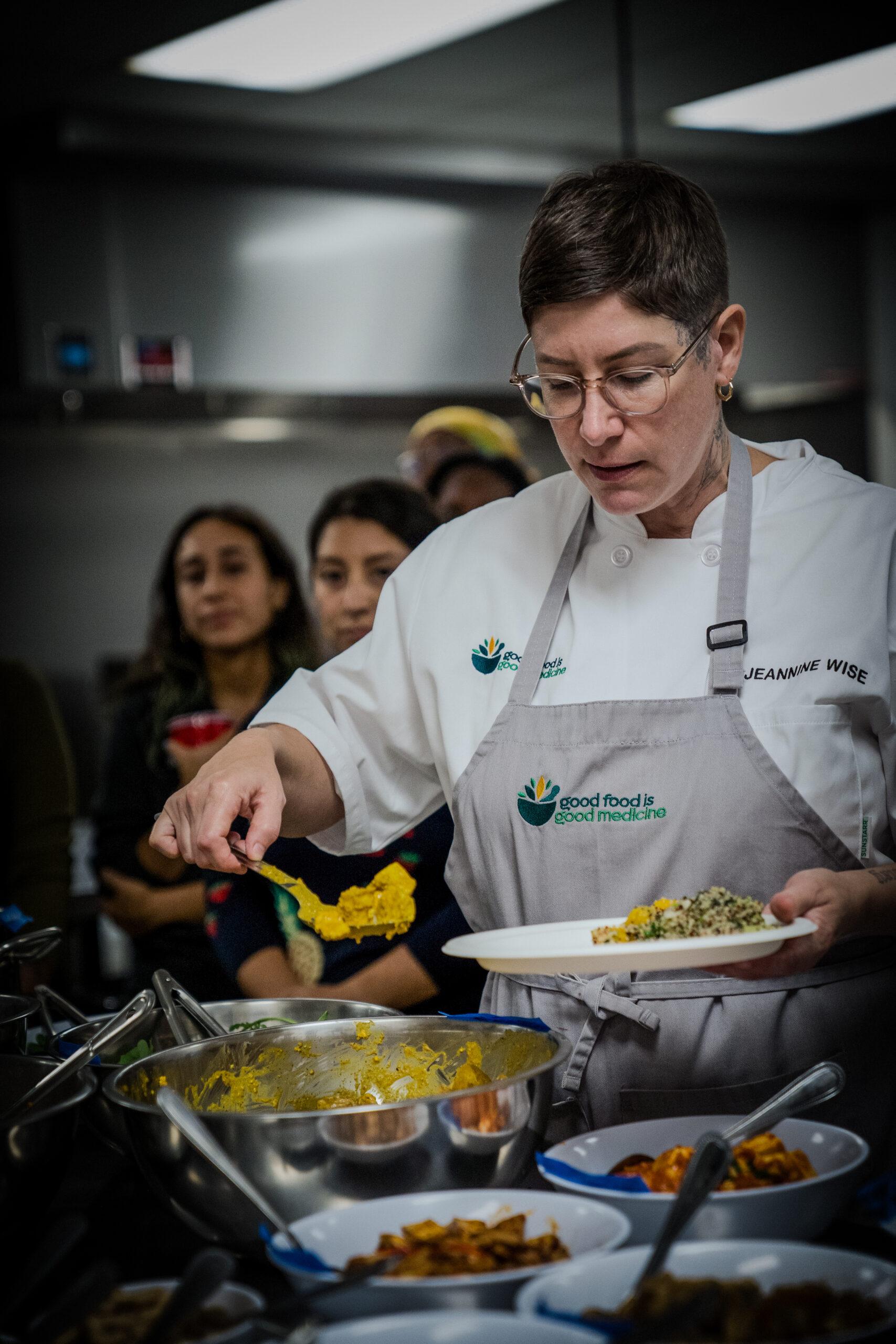
Wise says participants leave ready to share their skills, creating new cycles of growth and change. And because the curriculum is informed by the participants themselves, she also hears directly from them on how well it works. “Through community-based, participatory research, I know it’s effective because people are telling us in real time.”
In the end, it’s not about how well students can chop an onion. “What really matters to me is that our participants are happy. Their lives are changing for the better.”
The Illinois Peace Project is an initiative supported by partner organizations with a shared vision for reducing gun violence in Illinois.
NEXT STORY: Meet Peace Portraits Honoree Pablo Galvez >>