
Overheard at the Third Annual ‘We Are Our Own Medicine’ Conference
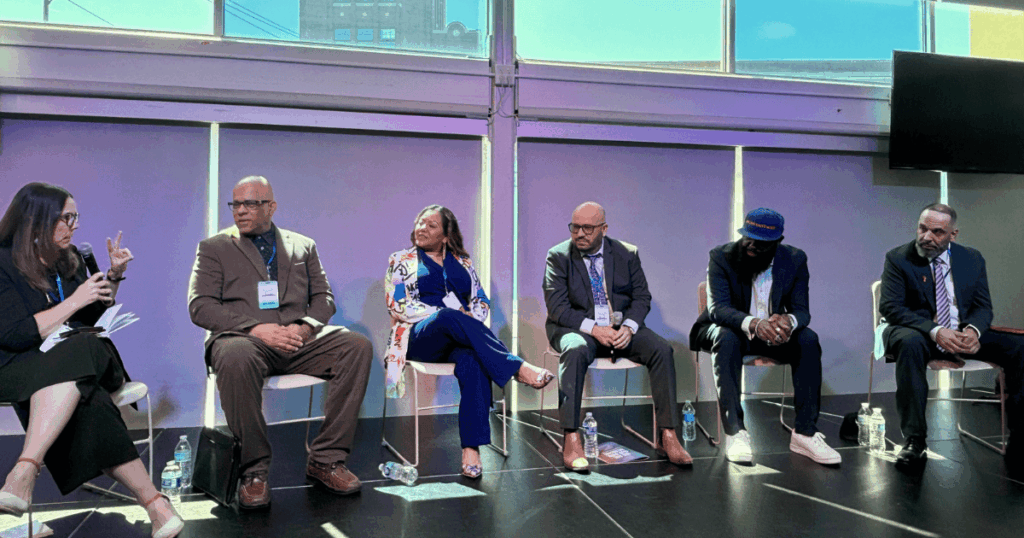
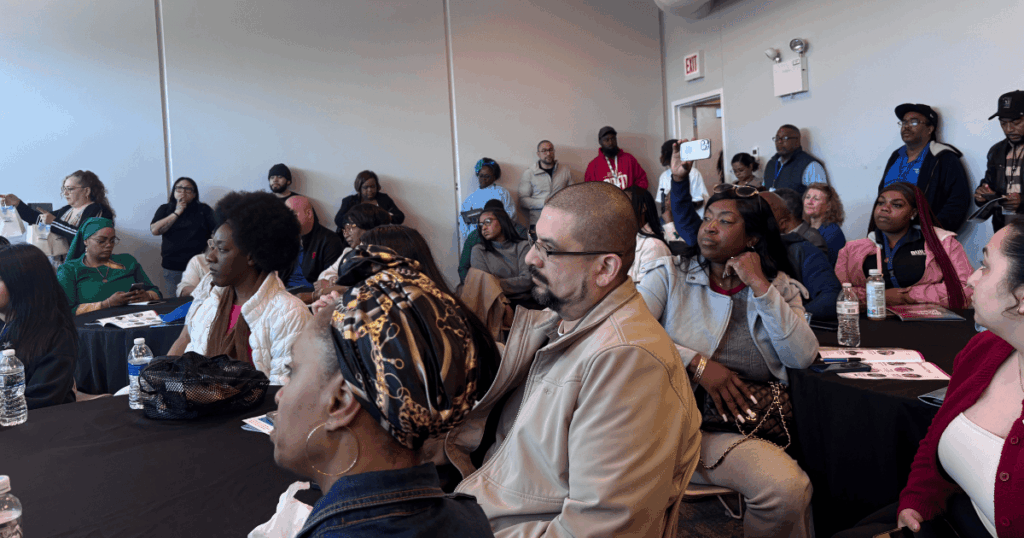
The third annual We Are Our Own Medicine Conference brought together leaders across the Community Violence Intervention (CVI), faith, and public health spaces at New Life Covenant in Humboldt Park. The two sessions, held over the weekend of April 24 and 25, 2026, featured a resource fair, breakout discussions, and informative panels with leaders and community members invested in reducing violence and healing Chicago’s neighborhoods.
Below are a few takeaways from leaders in CVI throughout the conference.
Alees Edwards, Founder and Director of We Are Our Own Medicine, on the origins of the conference…
“There was almost a whole generation that we lost due to gun violence. If we don’t intervene, give some solutions, resources, training, opportunities, that trend will continue. And anything that can take out a whole community or a whole generation is a public health issue.
When I was having trouble on my block, I was leaning on CPD to handle my issues. And I realized it shouldn’t just be CPD, it should be all of us. I had to activate all the assets in our community to address that problem together. So one person can’t do it, one agency can’t do it. It is us in the community who are our own medicine.”
Edwin Galetti, Vice President of Violence Intervention & Prevention of UCAN Chicago, on the realities of street outreach work…
“How many of us are going into burning buildings every day? And what does that do to you every time? Not only that, because we have lived experience and because we’re credible, the people that we are going to the crime scenes for are often our family members and our loved ones. So now we’ve got to be professional, and more. We don’t do traditional work, so we’re not going to hire traditional people, but that does not mean we should not invest in the people that we are bringing on to professionalize them.
I’m responsible for my staff’s health and wellness, because I have almost 300 individuals on my team. That’s 300 less individuals out there that we are dealing with [on the streets]. For me, it’s just a deeper investment in the people that are doing the work. I think that we’re asking too much just to do it on their credibility and their lived experience. We have to continue to pour into them.”
Galetti on “high-risk” participants…
“The majority of our perpetrators who are victimizing people have been victimized themselves. This is a learned behavior. They are responding in a way that they know how to respond. So what we can do is teach them how to respond, get them cognitive behavioral therapy, better coping skills, giving them a pathway. So that’s how you do it. You hug them, you love ’em up. You don’t label them high risk or at risk.”
Elvis Ortega, lead Street Outreach Liaison for the city’s Community Safety Coordination Center and the Mayor’s Office for Community Safety, on engaging with public officials…
“CVI is a strategy that works. In my role, I have the opportunity to advocate for a lot of you who do this work. You make my job easy, because people see the effect that it has in the community. What is being done is extremely important; people’s lives are at stake on a day-to-day basis. The city government has seen this be so effective that we’ve increased funding year-over-year for the last six years. When I point to why this is effective, there’s a city full of folks that say, ‘This has worked for me.’ And we see in the data that group-on-group violence is substantially down.”
“Make sure you’re painting the picture for all the folks in your community as often as possible. You need to continuously engage your elected officials. They need to be aware of everything you do, even if they don’t even agree with it. Keep painting the picture. If we’re not being clear about what our goal is, people will move the goalpost.”
State Senator Willie Preston, on gun violence as a public health crisis…
“We are treating gun violence like it’s something that we can just solve every year by putting a few million dollars in the budget—that’s wrong. We have to treat gun violence like the public health crisis it is, not just with one-year grants. We have to fund violence prevention like we fund hospitals.”
Learn more about We Are Our Own Medicine.