
Public Safety Advocates Discuss Trauma-Informed Leadership With Everytown
To work within the field of Community Violence Intervention (CVI) and public safety is to recognize that the days can be tough and that tragedy can strike at any time. The residual effects of trauma can seep into every area of the space, and without thoughtful leaders who prioritize peace and self-care, professionals might find themselves in distress over unhealed wounds.
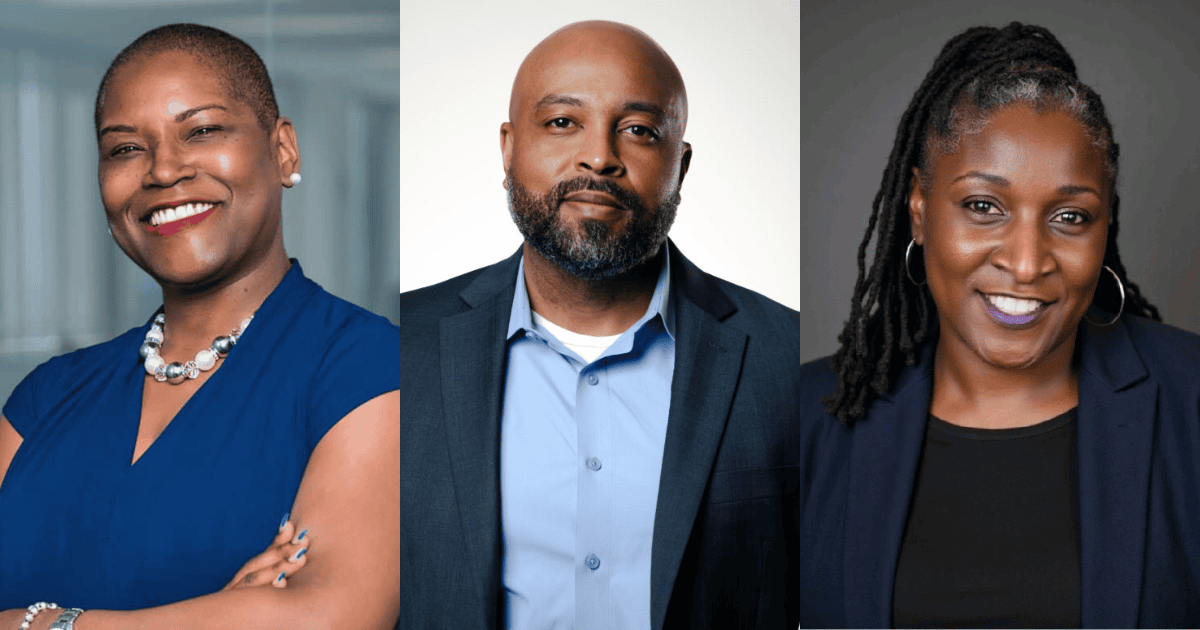
In two recent panel discussions for Everytown’s Community Safety Fund quarterly meeting, a group of trauma-informed experts spoke on how they’re modeling emotional regulation and healing through various organizational and personal practices. Metropolitan Peace Initiatives Chief Training Officer Dr. Vanessa Perry DeReef, Public Equity Executive Director Tony Woods, and Newark, New Jersey Deputy Mayor for Public Safety Lakeesha Eure were among those who shared, as the conversations were moderated by Everytown’s Gun Safety Director Abigail Hurst and Associate Director of Programming and Administration Jaunita Pye.
From encouraging staff to take necessary breaks to setting boundaries to promoting healthy lifestyle behaviors, the panelists discussed practical trauma-informed strategies they’ve used to help curb burnout and cultivate restorative environments within their organizations.
Below, a few key takeaways from the discussion.
Dr. Perry DeReef on trauma-informed leadership…
“When I think about trauma-informed leadership, it is an opportunity to lead with your heart and your head. Notice I said ‘heart’ first. For so many years, traditional leadership was kind of cold and rigid. Trauma-informed care gives you the opportunity to be flexible and meet your employees where they are with a listening ear, a caring heart, and a solutions-based lens. […] We use more of our personality to support our direct reports who become family. It’s really difficult to even think of them as direct reports. These are my people that I’m supporting and helping no matter what. It’s relentless hospitality and relentless engagement. It’s meeting people where they are, and taking them where they want to be.”
Woods on how he provides psychological safety among his staff…
“I always tell my staff that they don’t work for me — we work together. Ideally, I establish these relationships off trust. I lead with love for the most part. We try to create an environment that promotes safety and trust. Even though I’m at capacity right now, I think the biggest thing is just allowing staff the space and room to vent. […] I need to hear it so I know how to address it. It can be overwhelming at times, but I think it creates the space for trust and safety.”
Eure on cultivating a safe space…
“A lot of the people that we’re working with know punitive measures. They come from places already where everything is punitive, and so some of them don’t care about the punishment. Some of them don’t care about what you want to say and what you want to do. Some of them have authority issues, so you have to be able to lead them from a space that’s not the same as the systems that are already harmful. This work is personal, so supervision must be like a sanctuary. You’ve got to be able to make it sacred so that it doesn’t create and cause more harm, and so that it’s not another system that traumatizes.”
Dr. Perry DeReef on prioritizing personal circumstances over professional responsibilities…
“It’s really important that we always lean in and check in on our folks because there’s a universal understanding that everybody has been traumatized in some form or fashion, either directly or indirectly. [At the Metropolitan Peace Academy], before we talk about what’s happening, we ask them, ‘On a scale of one to ten, where are you checking in?’ If I have a team full of ‘twos,’ then I have some work to do, right? I have some sort of support that I need to provide to my team. Maybe we need to table all of those conversations around initiatives and really have a conversation around what’s going on.”
Woods on modeling healthy behaviors such as exercising, proper nutrition, meditating, and more to his staff…
“A lot of times I come around staff members and they see me drinking my green juice, my wellness shots. It generates some interest, we start having conversations, and then they start trying it. So once I started seeing that I could get buy-in, I’m like we really got to push this harder. It ultimately comes from leadership. We have a lot of people who use buzzwords and talk about wellness and being trauma-informed, but they’re not actually applying it to their own lives. I should be willing to do what I’m asking you to do, but also, I should be trying to figure out plans and the methodology to make it make sense for everybody because wellness looks different from person to person.”
Eure on accountability and having hard conversations while being a trauma-informed leader…
“Being able to talk to a person and say, ‘Hey, I know today is a tough day for you. You’re going through a little bit and you may need to go home today. But tomorrow, when you come back, you need to do a corrective course action.’ […] So many times we have folks that when something happens to them, they will crash the bus and everybody in it. We have to have them not be able to do that and [for them] to have some self-regulation, self-control, and be able to accept whatever it is that they did in a way that it doesn’t bleed on other people.”
Learn more about Everytown here.