10 Years of CVI: Inside Chicago’s ‘Art of Peace’ Celebration and Expo
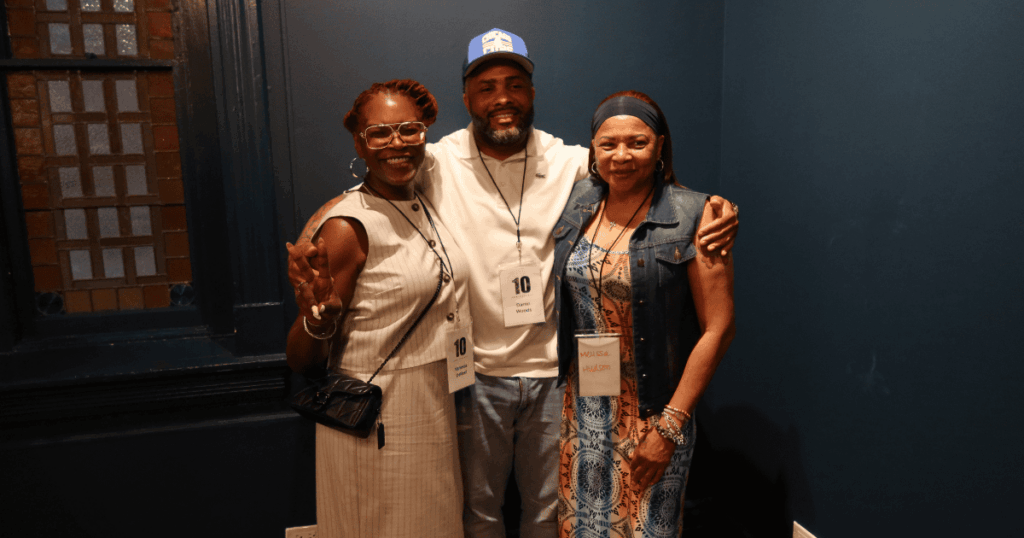
A decade ago, several community-based anti-violence and philanthropic organizations from around Chicago took shape and stood together to deepen their investment in Community Violence Intervention (CVI) as a strategy to curb the gun violence happening across the city. On Wednesday, June 10, 2026, those same organizations came together at “The Art of Peace: 10-Year CVI Anniversary Celebration & Expo” for an evening of reflection, education, organizational activations, community-building, and more, as they marked a decade of partnership in helping to reduce gun violence in Chicago.
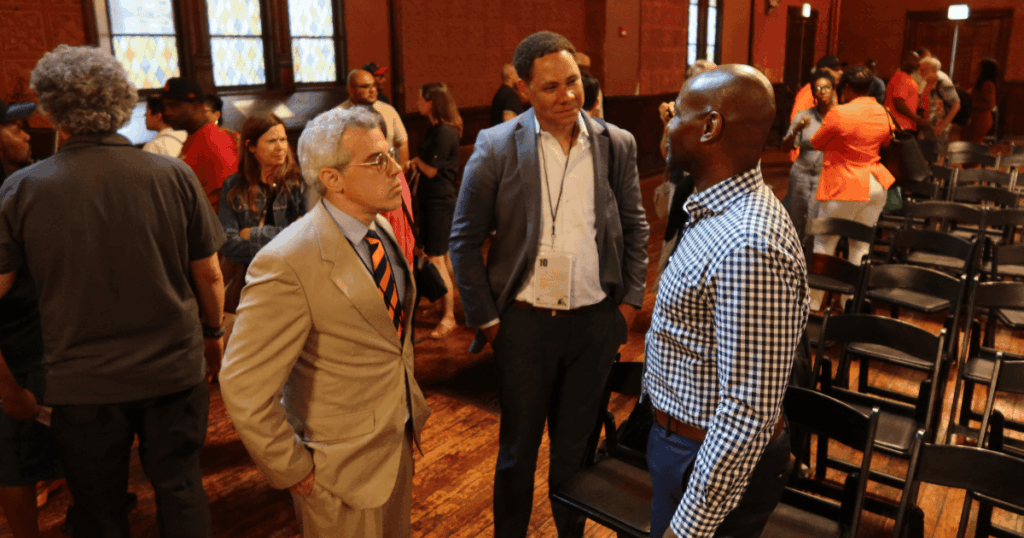
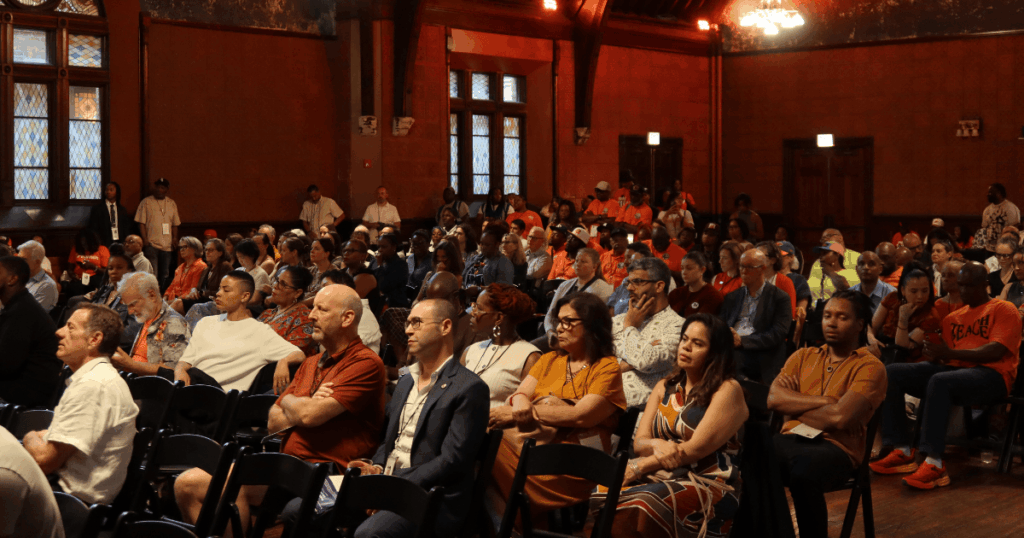
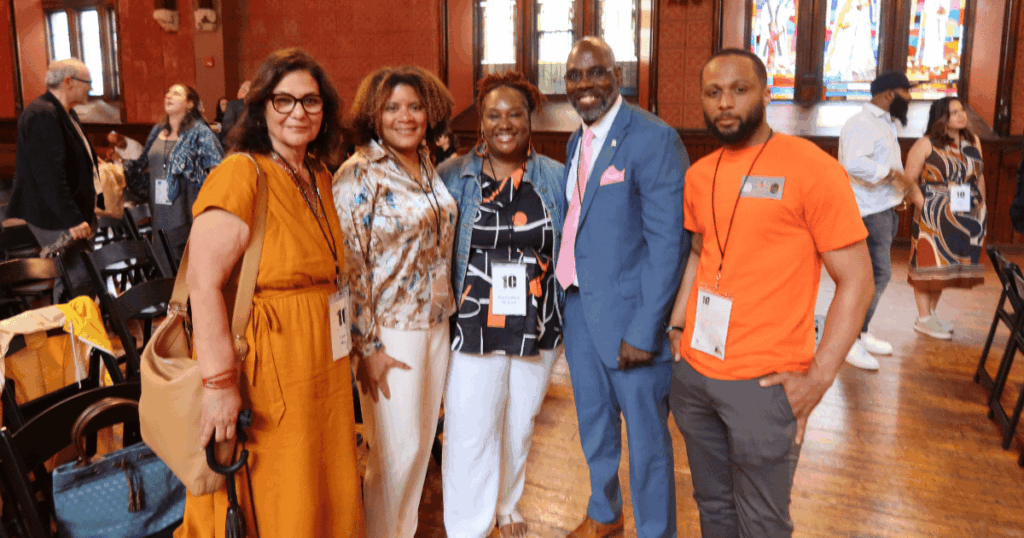
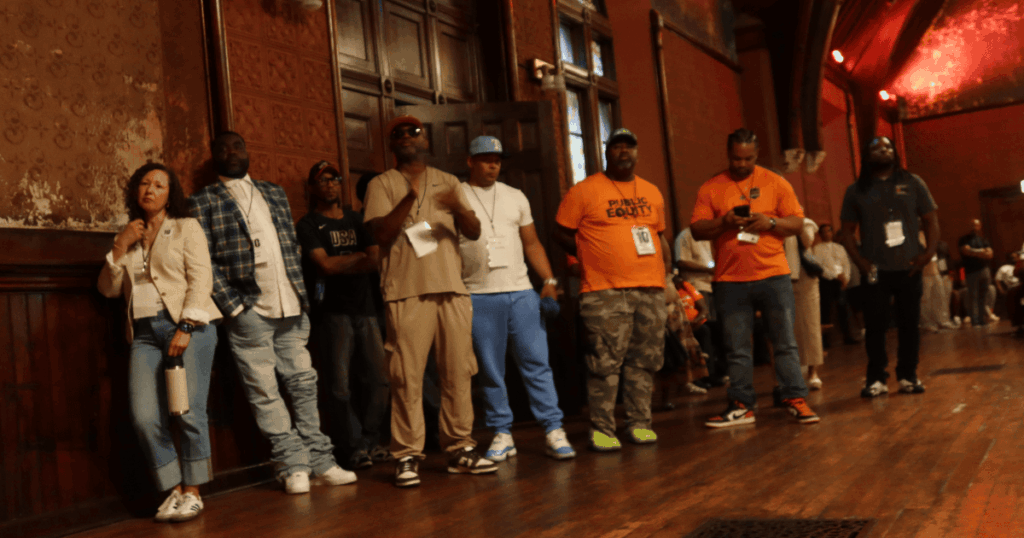
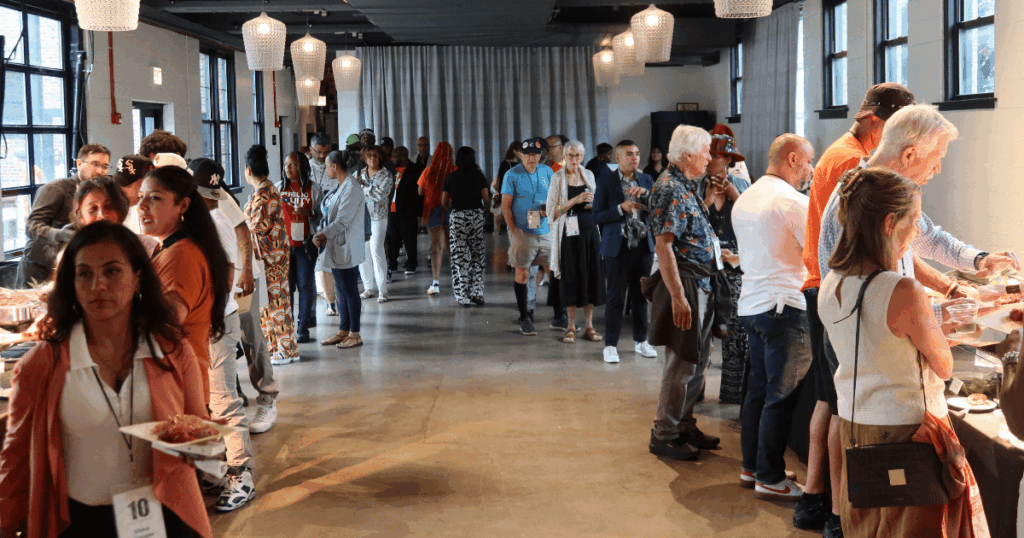
CVI professionals and supporters packed the house at the Epiphany Center for the Arts on Chicago’s West Side for the celebration hosted by Chicago CRED, Communities Partnering 4 Peace (CP4P), the Institute for Nonviolence Chicago (INVC), Metropolitan Peace Initiatives (MPI), the Partnership for Safe and Peaceful Communities (PSPC), and Northwestern University’s Center for Neighborhood Engaged Research & Science (CORNERS). The event followed behind a historic 2025, as Chicago closed out the year with the lowest number of homicides since 1965.
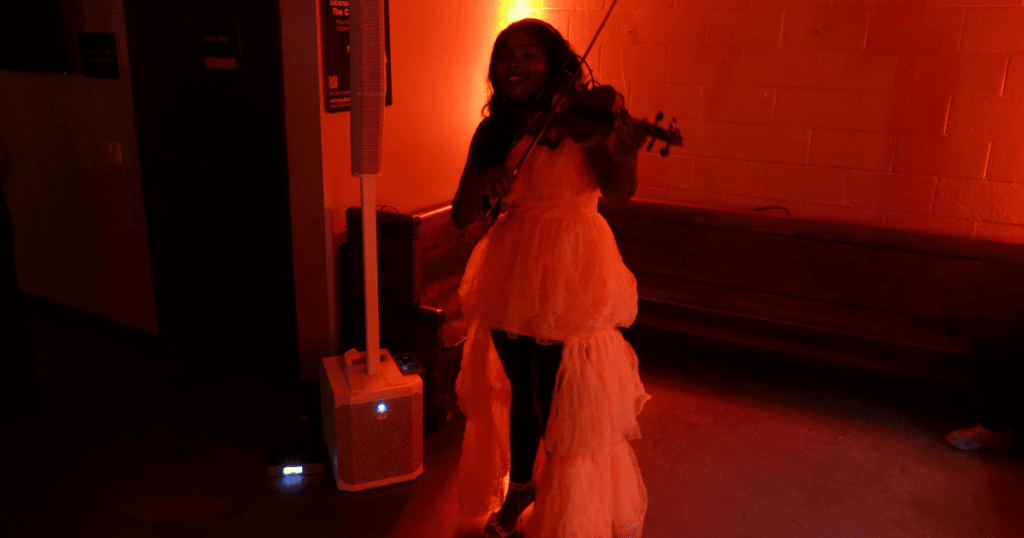
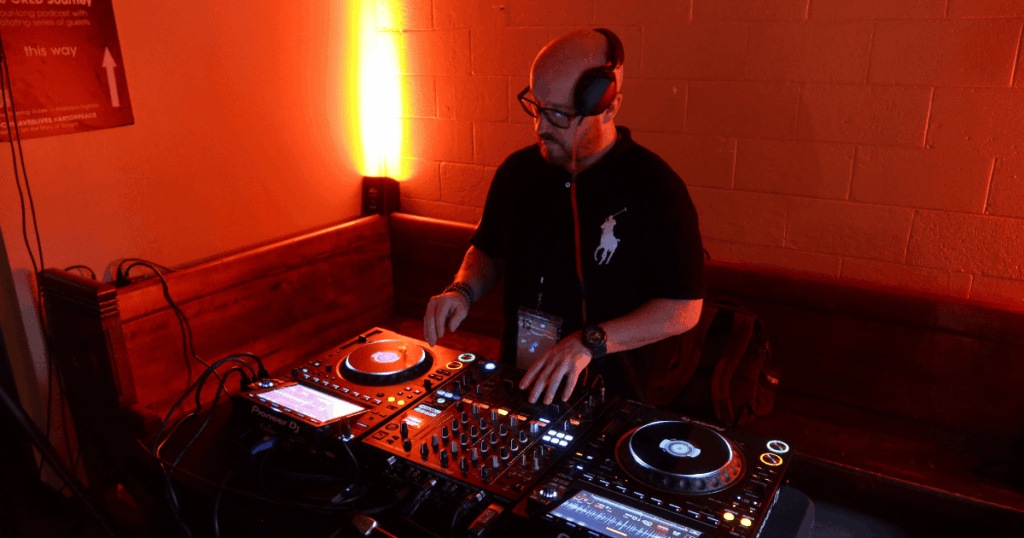
From insightful panel discussions and live podcast tapings to art and storytelling activations to wellness rooms and a makers’ market, the expo highlighted the progress of the organizations’ collective efforts and their shared vision for the future. Take a peek inside “The Art of Peace” below.
LICENSE TO OPERATE: THE CRED JOURNEY
Live podcast taping
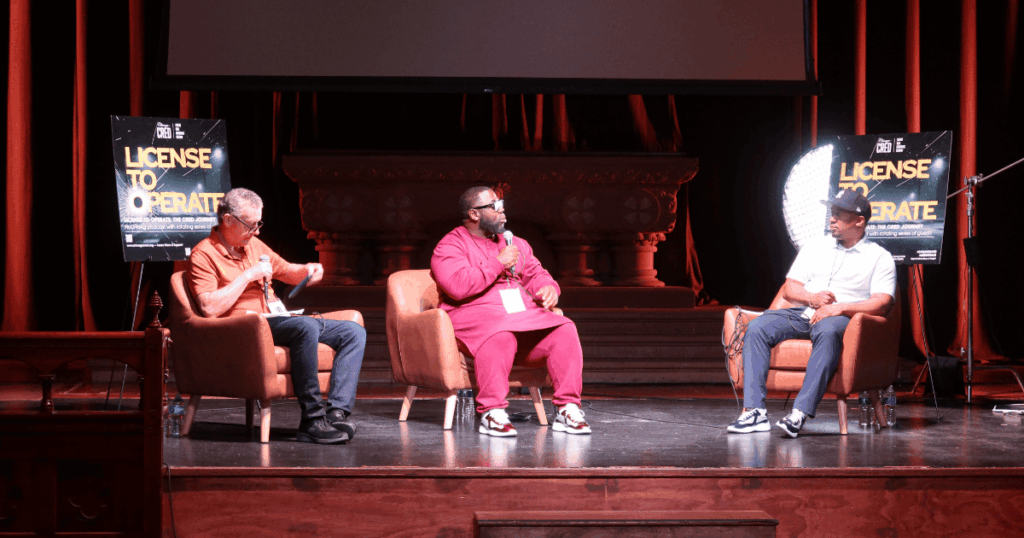
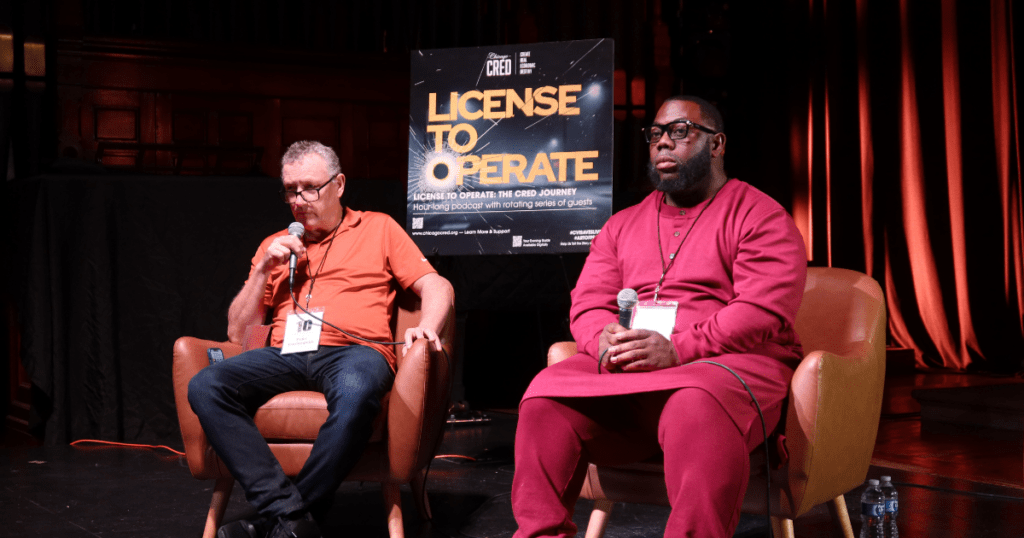
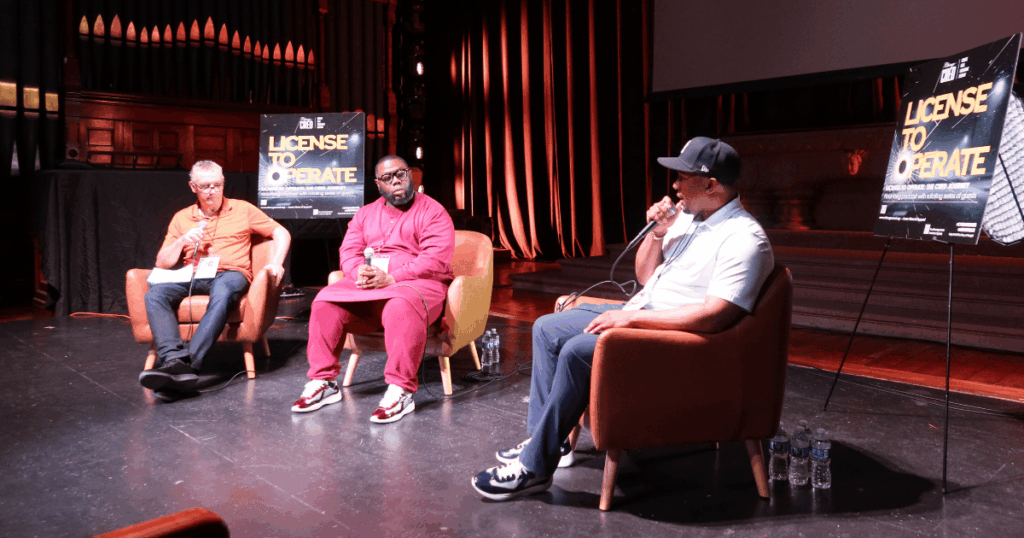
License to Operate hosts Kanoya Ali and Peter Cunningham brought their podcast to the big stage for four live tapings, featuring conversations with people who have transformed their lives and are dedicated to creating a safer Chicago. Guests included Chicago CRED Site Manager Jevon Standback, program alumnus Rahn Jointer, Manager of Clinical Operations Dorothy Wilson, and Non-aggression Curriculum Trainer Brandon Richardson.
Richardson, who grew up on the South and West Sides of Chicago, spoke of being raised in environments fraught with poverty, drugs, violence, and gang activity. After being introduced to programming at Chicago CRED, he said his eyes were opened to a new way of life that prioritized peace and healing. He now teaches the principles of non-aggression, encouraging his participants to build emotional regulation and leadership skills.
“I didn’t have nobody teaching me self-control and things like that, so I was always getting in trouble, reacting, or lashing out because I was angry or mad,” Richardson said. “But, coming to this program, they teach you, ‘Hey look, there’s better ways to resolve issues.’ It ain’t always about violence and the street way. I just took the approach, and it’s been working better for me ever since.”
Explore all episodes of License to Operate here.
FROM THE GROUND UP: 10 YEARS OF BUILDING PEACE
Art & storytelling activations + CP4P resource fair
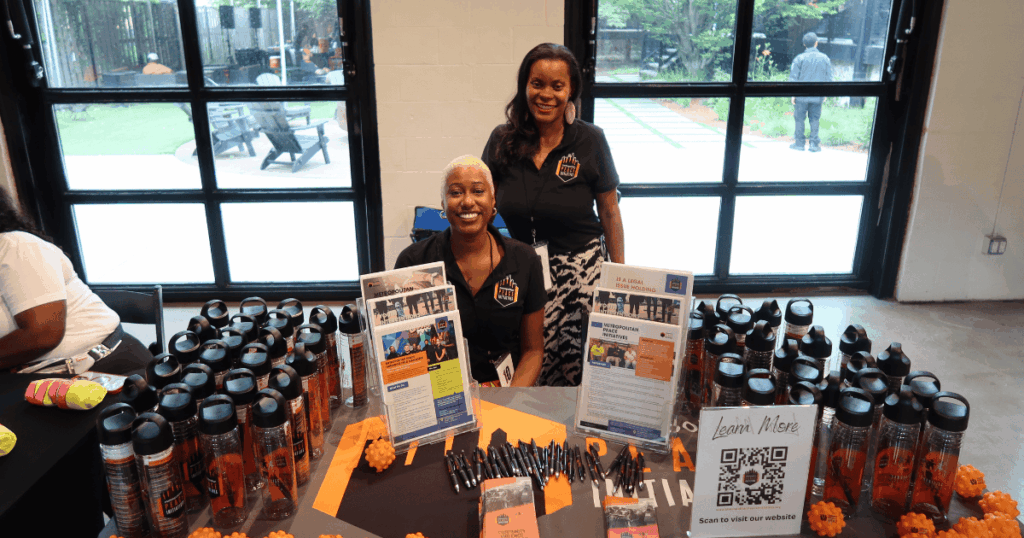
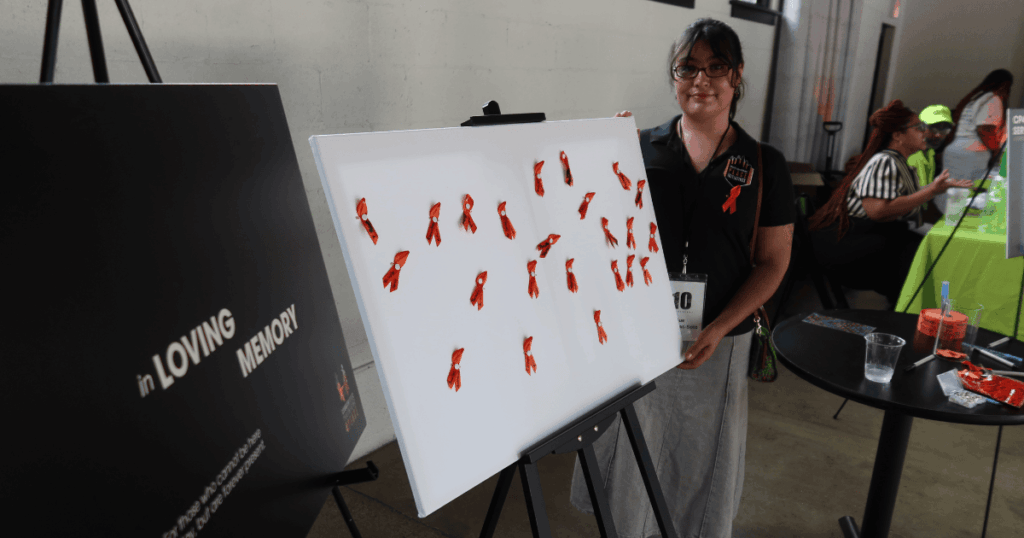
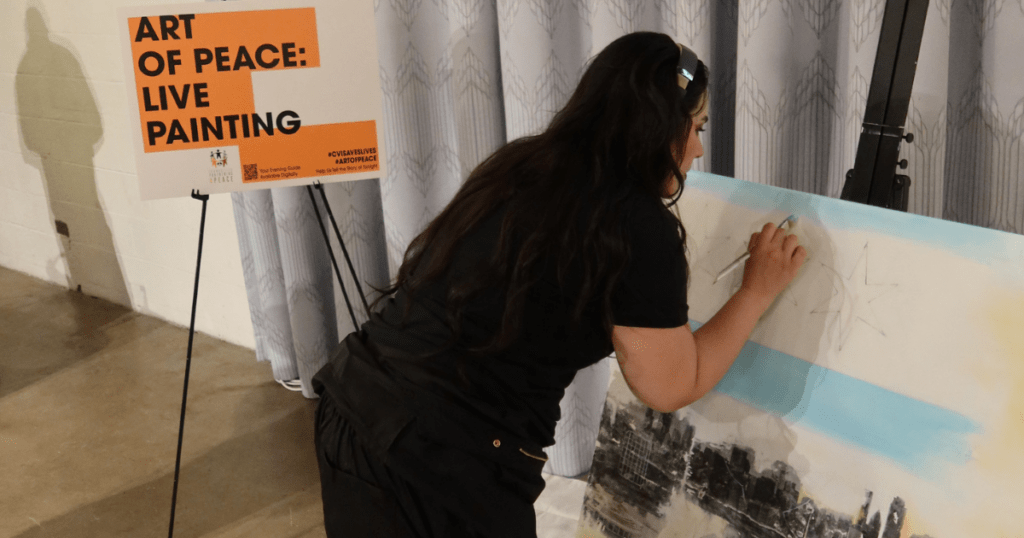
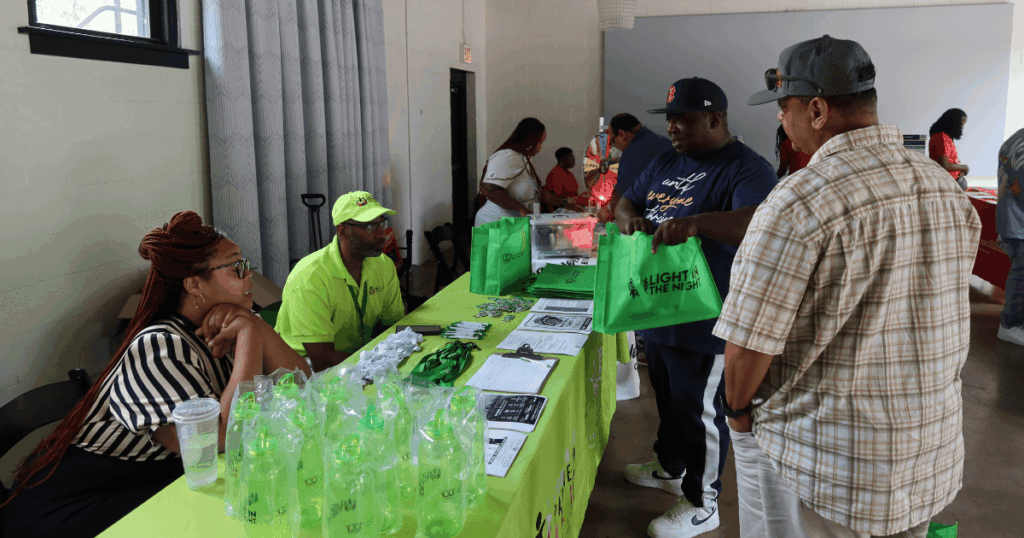
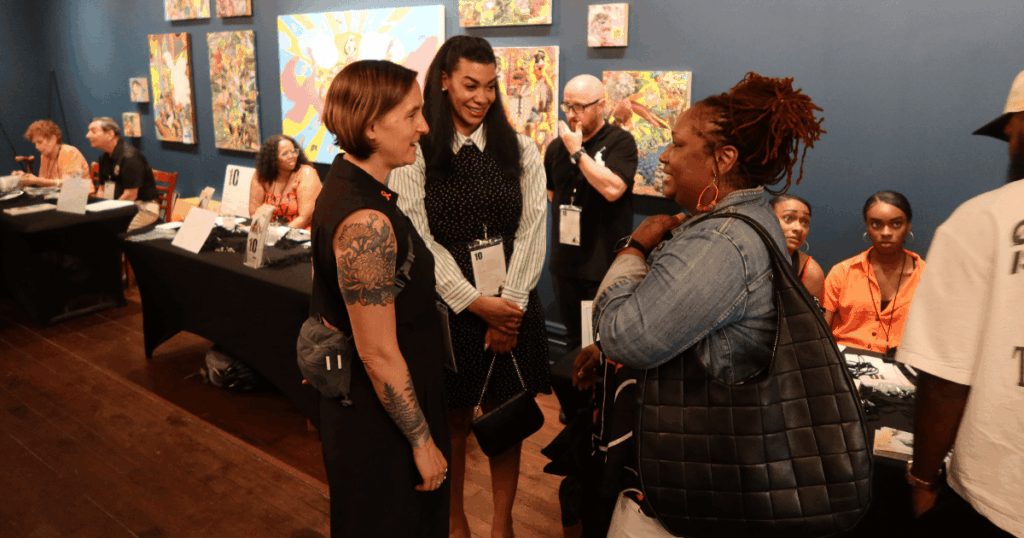
Metropolitan Peace Initiatives and Communities Partnering 4 Peace hosted an activation that leaned into the artistic theme of the evening. As guests walked through the space, they took in a live painting by MPI Graphic Designer and artist Isabel Miranda. The artwork was raffled off at the end of the night, with one lucky winner receiving a one-of-a-kind piece.
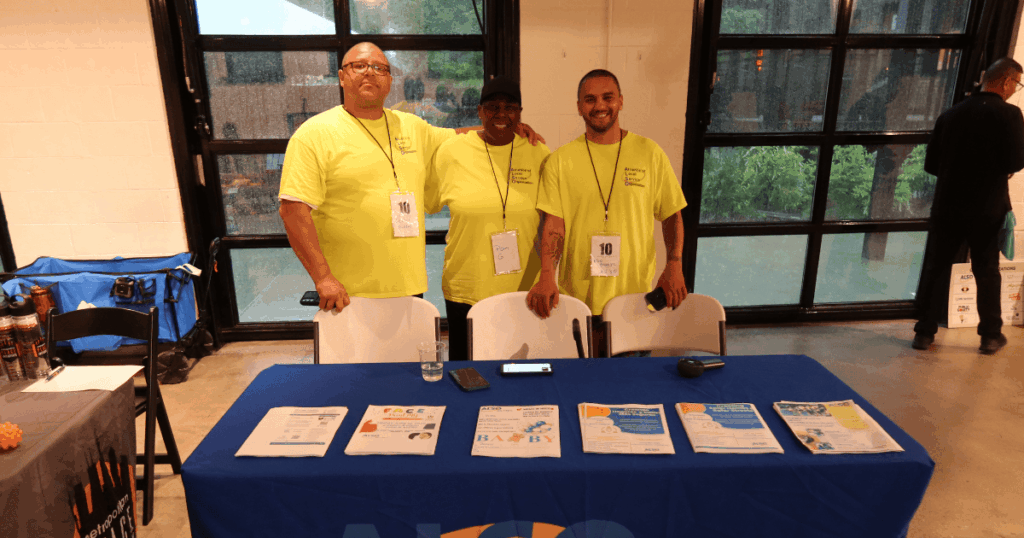
The activation also included a community art project honoring those lost to gun violence, a CP4P resource fair, and a storytelling recording booth where guests shared their reflections on peace, the work of CVI over the last ten years, and their hopes for the future.
Dwayne Appling, a Case Manager at UCAN Chicago, shared, “My hope and vision for Chicago over the next ten years is true collaboration and unity amongst the communities that suffer from structural violence over all these years. I want my community members and all other communities to understand that a lot of these problems, we didn’t make them — we’re just surviving through them.”
Marilyn Pitchford, Director of Violence Prevention at Breakthrough Urban Ministries, said, “[With CVI], I want to be the message that I bring by taking care of myself first, and then it’s going to spill out. We’re going to continue to take care of each other. We’re going to continue to take care of our neighbors and our children.”
CHOOSE PEACE
Film screening & panel discussion
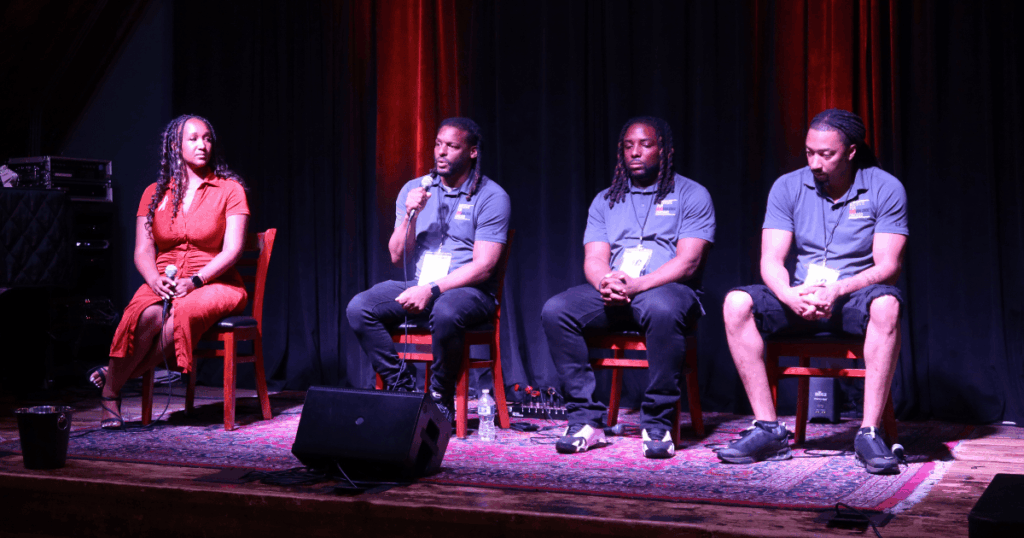
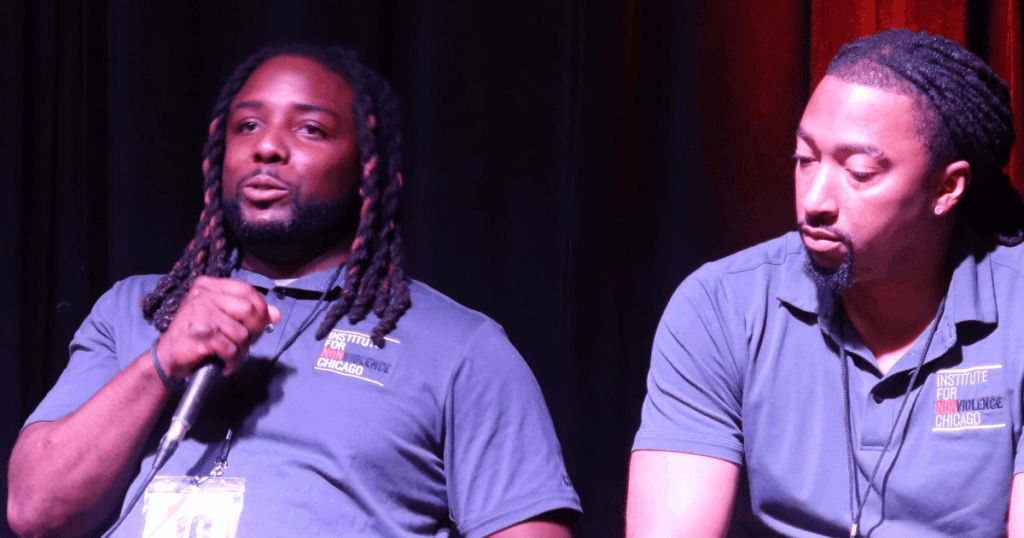
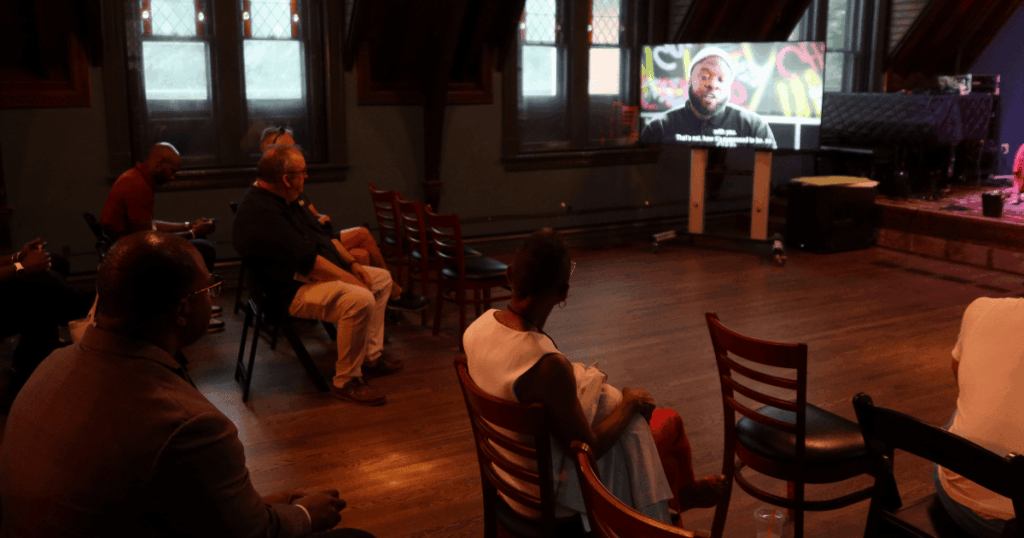
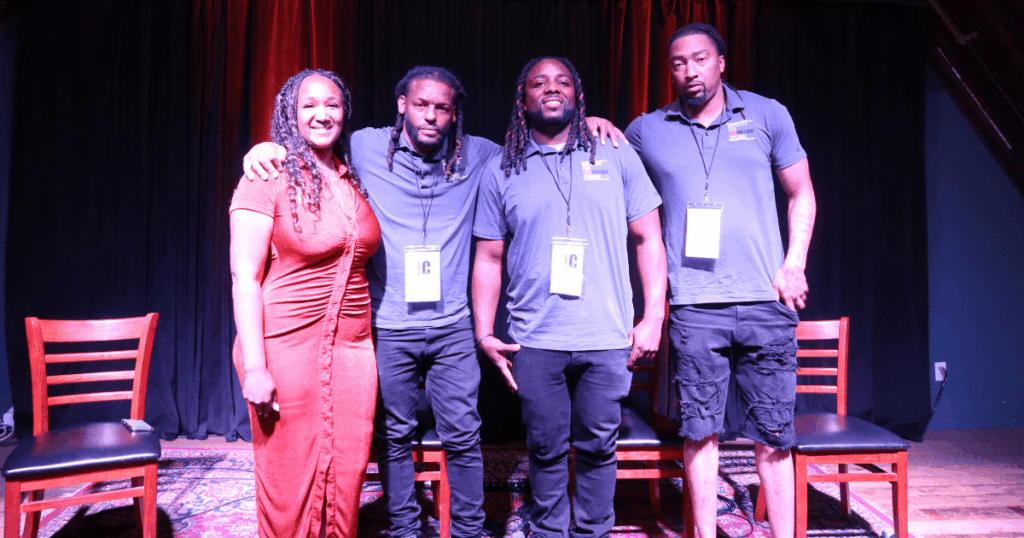
Institute for Nonviolence Chicago (INVC) held a screening of its powerful short film Choose Peace, which explores the work of CVI through the eyes of those with boots on the ground. Shunda Collins, INVC Vice President of Development and Communications, led the screening and subsequent panel discussion with several CVI professionals from the film.
Reflecting on the work and impact of CVI, Collins said, “The CVI field has built a strong network and infrastructure over the course of 10 years, and that is something remarkable. This is one of many opportunities we have to celebrate that progress and the remarkable work that’s being done in communities and across other sectors too, in terms of partnership, all over the city.”
The film touches on INVC’s suite of CVI services, which includes street outreach, victim services, case management, re-entry, workforce, and behavioral health. INVC Founder and CEO Teny Gross highlighted the growth of CVI over the last decade and how it’s transforming Chicago.
“There’s about 2,000 people, I repeat about 2,000 people, with criminal backgrounds who are now involved in some form of peace operation,” Gross said. “We have the famous pipeline, ‘from school to prison.’ This is the pipeline from wreckage to building the city and changing the city.”
WELLNESS STATIONS & MAKERS’ MARKET
Wellness activations & business vendors
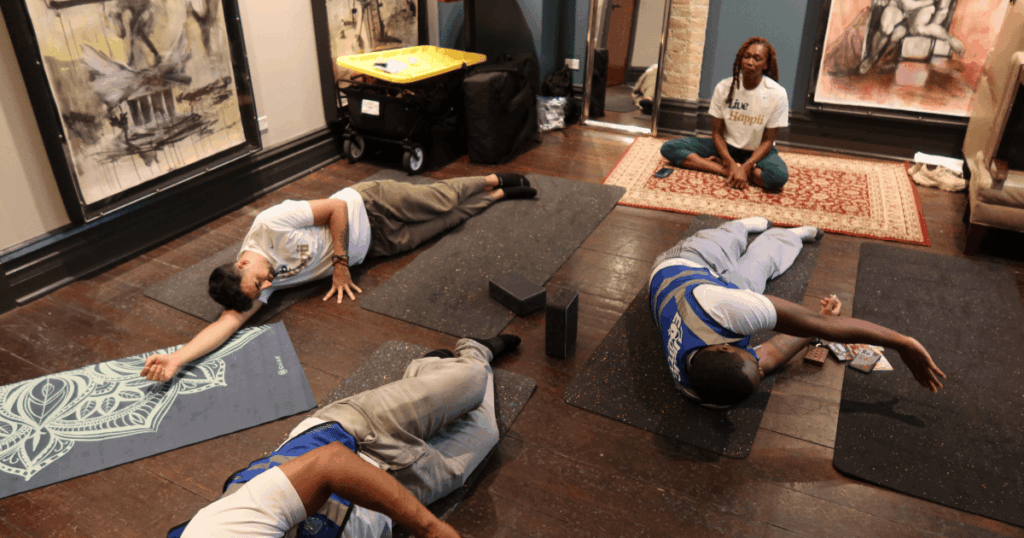
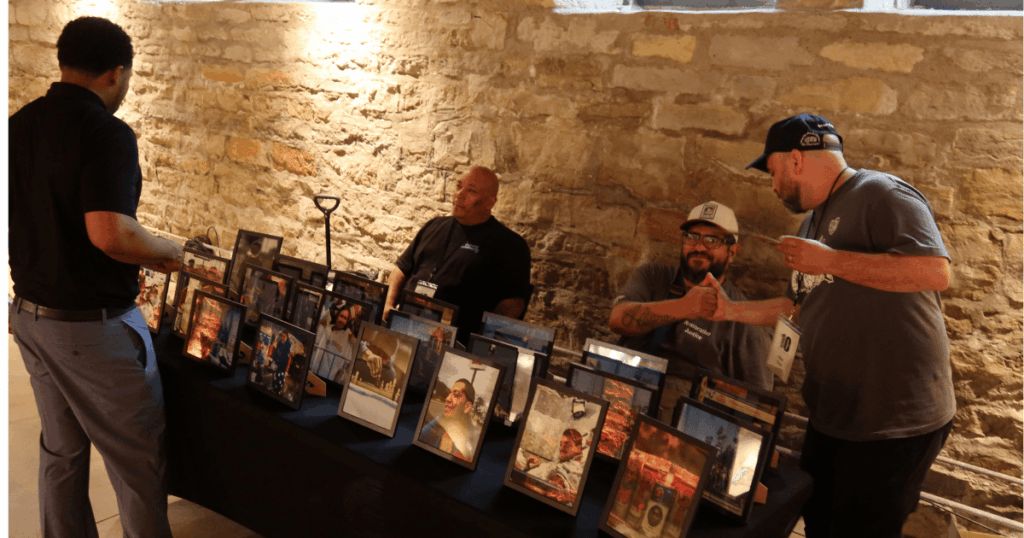
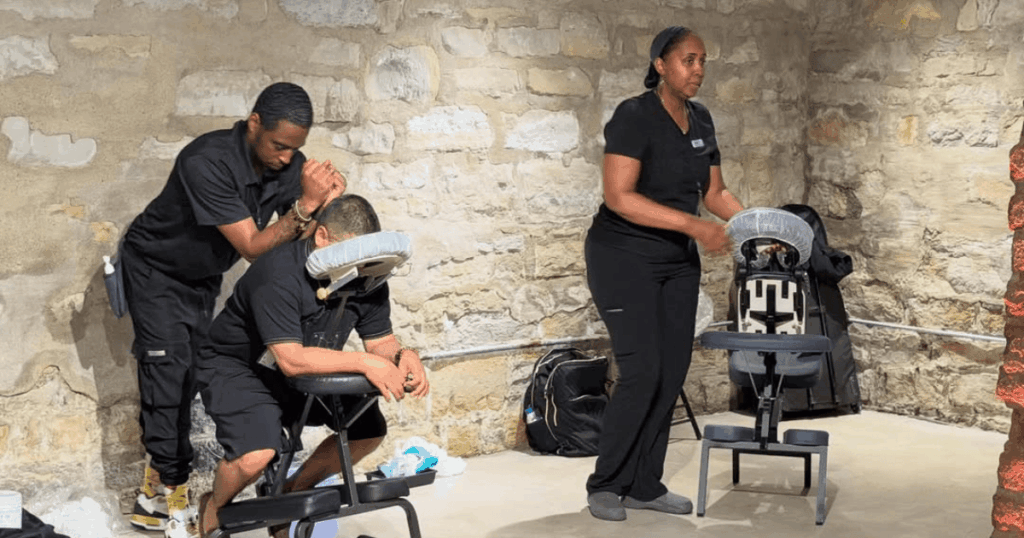
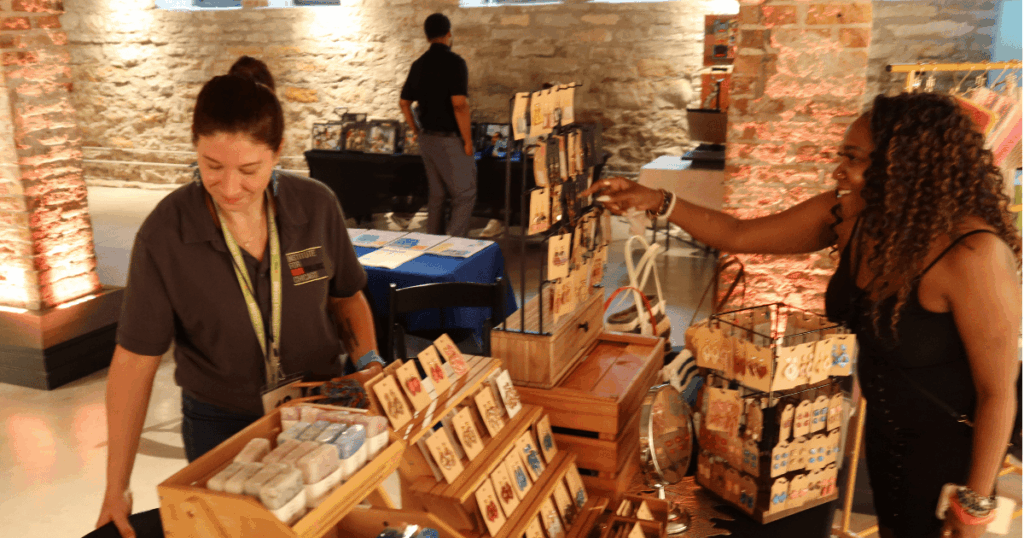
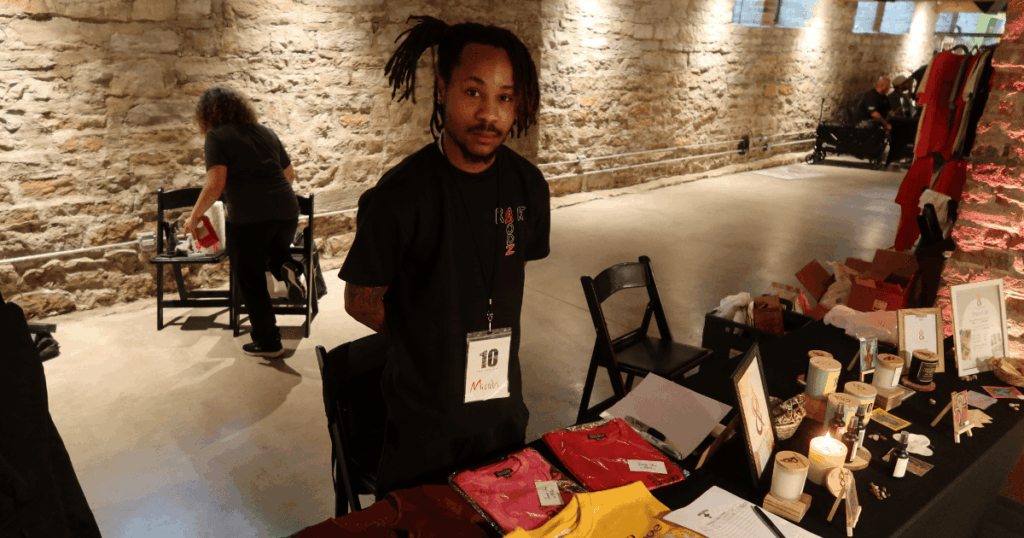
The expo also featured a makers’ market where CVI professionals sold their products, everything from jewelry to artwork to clothing, candles, and more.
Additionally, guests were encouraged to zen out at the wellness pop-ups throughout the space, which included yoga and massages.
10 YEARS OF CVI: LESSONS, LEADERSHIP, AND THE ROAD AHEAD
Wellness activations & business vendors
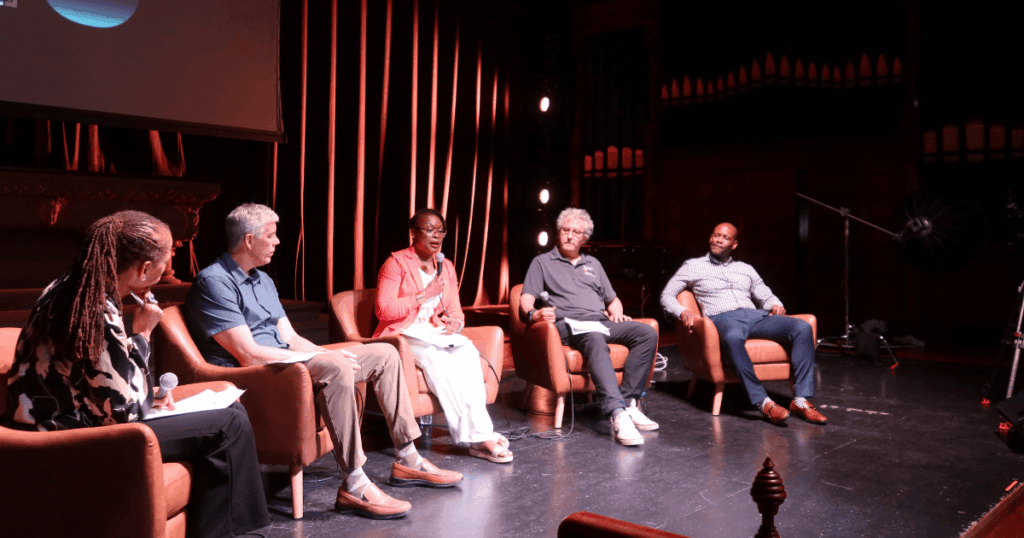
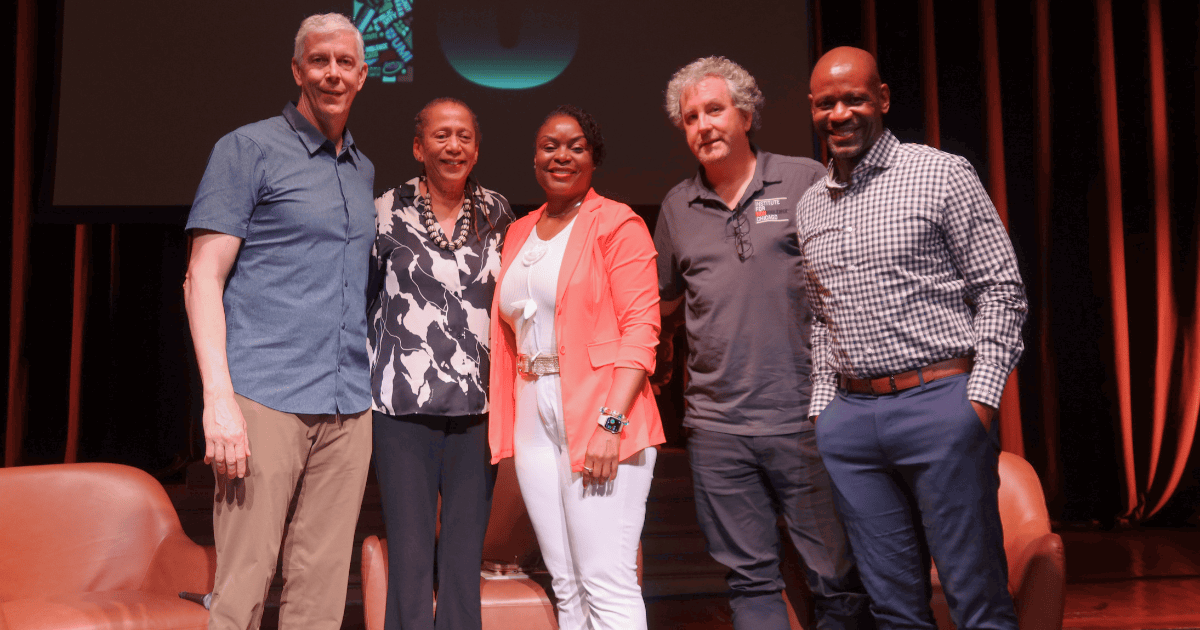
The evening ended with guests coming together for a panel discussion featuring leaders of all four CVI organizations, moderated by Chicago Tribune columnist and ABC7 Chicago commentator Laura Washington. Panelists included Arne Duncan, Founder of Chicago CRED; Esther Franco-Payne, Executive Director of the Partnership for Safe and Peaceful Communities; Vaughn Bryant, Executive Director of Metropolitan Peace Initiatives; and Teny Gross, Founder and CEO at the Institute for Nonviolence Chicago.
While the work of CVI in Chicago dates back to the late 1990s, these four organizations took shape in 2016 after a surge of gun violence in the city. (Many cite the 2014 murder of 17-year-old Laquan McDonald as being the driving force behind the city adjusting its public safety strategy.) Aside from a spike in gun violence during the pandemic, the city has seen steady declines in victimizations and arrests since 2016.
“[It’s] not just the violence that’s down 54 percent since the pandemic, what people don’t understand is that arrests are also down like 32 percent,” Duncan said, emphasizing that CVI is just one critical piece of the puzzle in reimagining public safety.
“The only plausible explanation is we’re not arresting our way out of it. As people are changing behavior, less people are shooting, more people are de-escalating, people are healing from trauma. That’s the collective work of all of you here and the people not in this room. That’s why violence is going down.”
Washington pointed to estimates that the city, county, state, and private sector have invested approximately $1 billion in CVI over the last decade. (To compare, the police budget is roughly $2 billion per year.) Franco-Payne, whose organization brings together more than 50 foundations and funders, advocated for increased and sustained funding for CVI in the years to come.
“We want a public health infrastructure. That means that there are line items at city, county, and state levels to support this work, and it does not have to be a fight every single year,” Franco-Payne said. “Philanthropy is here as a support, as a supplement to provide opportunity for innovation and continued building of this work. That’s my hope.”
Bryant spoke to the optimism he has for the future of CVI and a safer Chicago, stating, “I think what gives me hope is what we’ve built so far and the fact that the public sector and the philanthropic sector have stuck with us. We have to be as a collective committed to our participants and their growth. And they have to be just as committed to their growth.”
“There’s a meeting in the middle of that happening, and that’s what the commitment is that we’re making. I wouldn’t get up every day and do this work if I wasn’t optimistic that we could get there.”
Check out more “Art of Peace” photos below.